Camino de Santiago, Days 4-6

At a Glance:

Day 4: Pamplona (Iruna) to Cirauqui (Zirauki) (34.7 km, including detour to Eunate)

Day 5: Cirauqui (Zirauki) to Los Arcos (35.1 km, including alternate scenic route via Luquin)

Day 6: Los Arcos to Logrono (27.8 km)

Daily Highlights:

Day Four: We headed out of Pamplona early with the intention of putting in a big day.  We started by walking through Pamplona’s suburbs before climbing almost 1000 feet.  At the top of the mountains, we were greeted by a series of windmills (and the corresponding wind).  A wrought iron monument shows medieval pilgrims battling the wind on the way to Santiago with the inscription: “Donde se cruza el camino del viento con el de las estrellas” (“Where the way of the wind crosses the way of the stars.”). 

IMG_1352

Permanent pilgrims.

IMG_6205

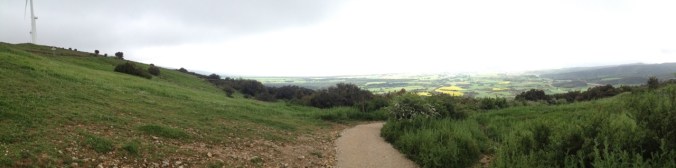
Looking down at the valley below.

Back down in the valley floor, we opted to detour to the Church of Santa Maria de Eunate.  The 12th Century church is linked with the Knights Templar and has a simple, but beautifully calm interior and a surrounding porch.  There were several non-pilgrims inside praying and a separate group outside preparing what appeared to be a tasty feast!

IMG_6218

Exterior view of the Church of Santa Maria de Eunate.

IMG_6215

The scallop-shell on the exterior of the church marks it as a stopover on the Camino.

IMG_6219

Preparing for a feast at the hermitage building next to the church. Just like a pot luck!

Once we were back on the Camino, we stopped for tapas in Puente la Reina.  The town is designated as the end of “Stage 4” by Brierley, but it was still relatively early and we decided to push on another 8 km or so to Cirauqui (for a total of about 21.5 miles).  Like many of the towns that we pass through on the Camino, Cirauqui is best described as a small, seemingly abandoned village on a hill.  We stayed at the sole albergue in town and joined the group dinner run by the albergue.  Unlike some of the pilgrim meals, where wine is included but limited, our host continued to check on our pitcher of wine at dinner to make sure that we were getting enough to drink (and encouraging us to eat more salad and pasta as well).  Once again, there was a family connection between the albergue and the winemaker!
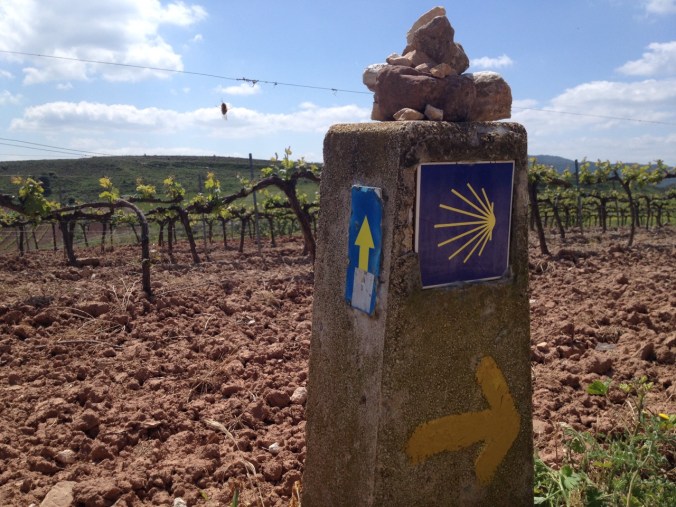
IMG_6227

Passing by one of the region’s many vineyards (part of the Navarra region).

IMG_6231

Someone spent a lot of time cultivating this map of the world on a nearby hillside.
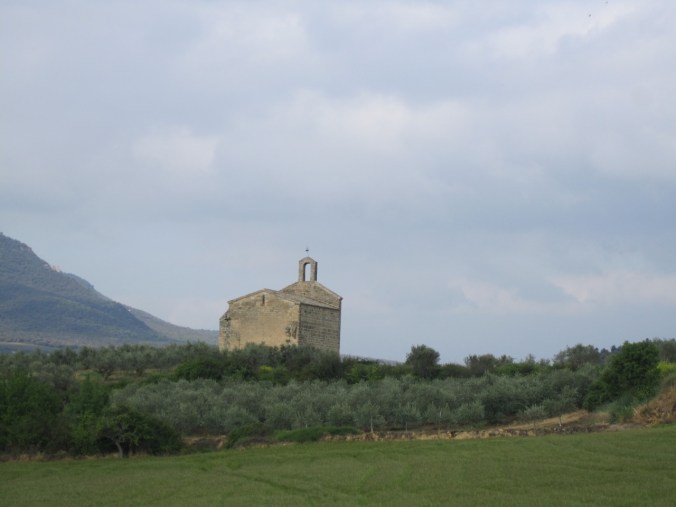
IMG_1358

Small chapel we passed early on day five.

Day Five: We planned another long day and passed quickly through the first couple of towns until we arrived in the small city of Estella (about 14km down the road).  In Estella, we stopped in a bar/restaurant for breakfast and marveled at the number of locals enjoying their (presumably) first glass of red wine at 9:30am.  Just a bit further down the road, we passed through the town of Irache, best known for its fountain.  Now, many of the small towns have public fountains with drinking water for pilgrims, but Irache’s famous fountain has one handle for water and a second handle for wine! It is sponsored by a local winery and was good (at least that’s what we thought while hiking).  Quite the morning treat!
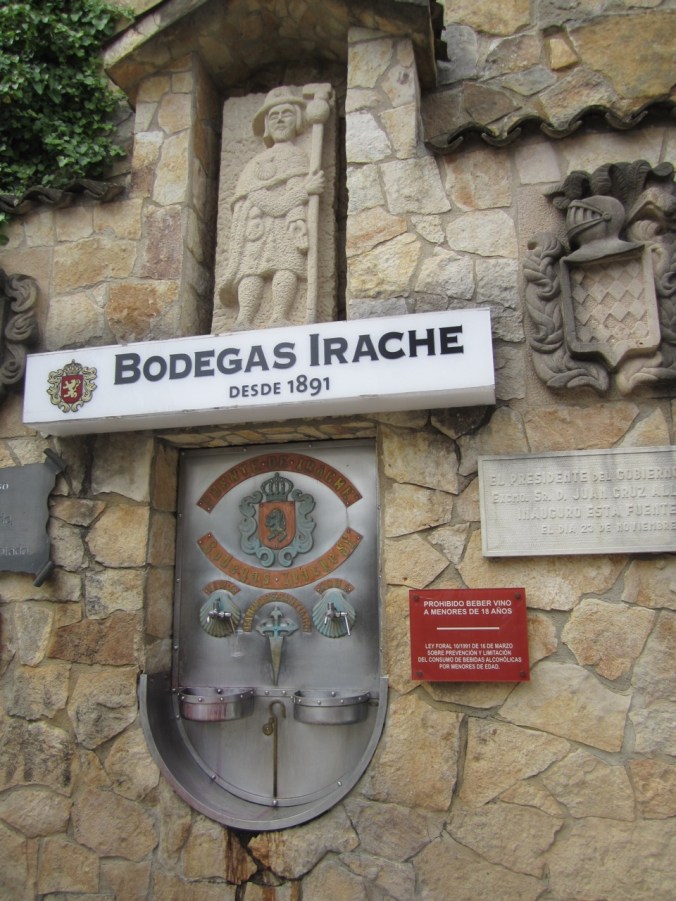
IMG_1362

The wine fountain!

IMG_6254

Fill her up!

We spent much of the remaining day on an alternate “green” route that went up through the hills on dirt tracks instead of following along the road.  It provided a peaceful alternative to the masses of pilgrims that we encounter each day on the Camino — over a couple of hours we only saw two other couples (and a horse) instead of dozens of people.  We ended the day in Los Arcos (the end of Brierly’s “Stage 6,” meaning that we did three stages in two days) and stayed at an Austrian-run albergue with lovely gardens and common areas (and a friendly black lab).

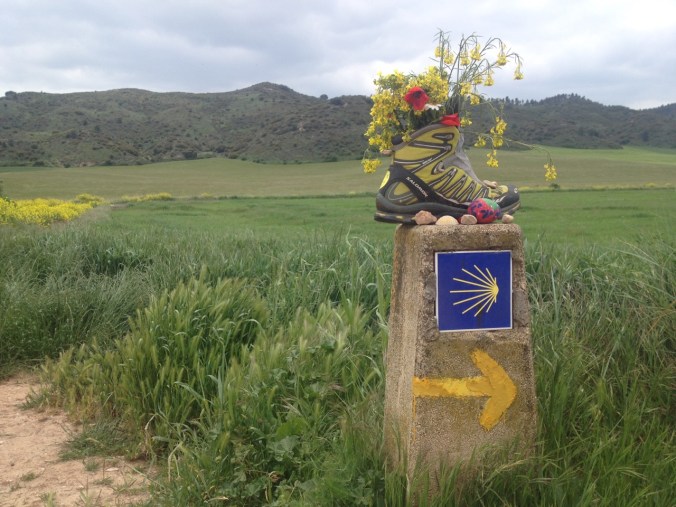
IMG_1365

IMG_6250

Day Six: With two long days behind us, we decided to take it easy and stick with the designated 27.8 km stage into Logrono.  Our morning was filled with a series of hilltop villages before we stopped to breakfast in Viana.  We were greeted in Viana’s cathedral by a hilariously talkative volunteer and also enjoyed the nearby ruins of the Church of San Pedro. 
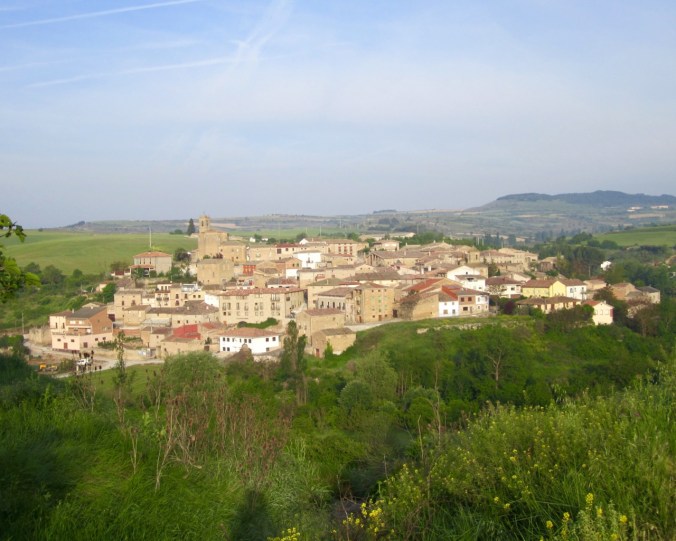
IMG_1368

One of the many hilltop villages we passed through.
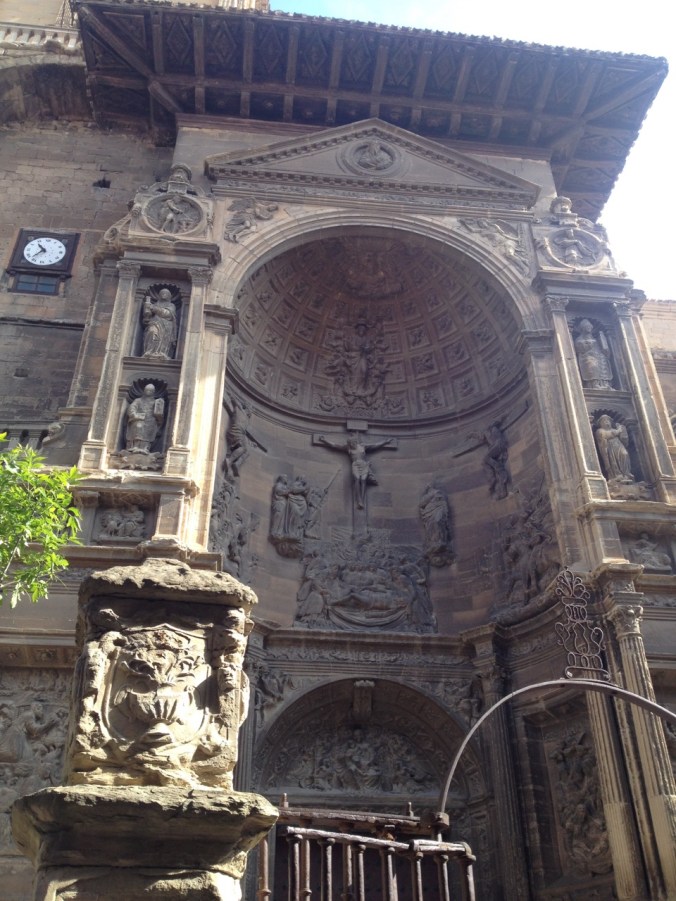
IMG_6256

The entrance to the cathedral in Viana.

IMG_1851

Ruins or skylight?

A couple hours later, we were similarly “greeted” as we approached Logrono by the daughter of a legendary gatekeeper of the Camino.  We had been led to expect that there would be a stand with figs and water to accompany her pilgrim credential stamp that reads “higos, agua y amor” (“figs, water and love”).  Alas, there were no figs, no water, and she spent the entire time that I was getting my stamp in what seemed to be a heated argument with her husband!  A memorable stop nonetheless.  Logrono proved to be a fairly sizable town, and we enjoyed tapas, beer, and ice cream along the main square.

IMG_6268

The entrance to the cathedral in Logrono.

After six days on the Camino, our feet are still blister free (but tired).  We’ve noticed that the Camino seems particularly busy (as least compared to my 2012 experience). This means that we can’t walk late into the afternoon (as we did on the JMT) without risking showing up in town and finding that all of the accommodations are already full.  To deal with this, we’ve been waking up early each morning so that we can comfortably fit in our miles by 1pm or so.  In the future, we may book ahead to allow us to walk further into the day, but on the whole we prefer the accommodations that are first-come-first-serve.

Camino de Santiago, Days 0-3

by Elizabeth

At a Glance:

Day 0: Madrid —> Pamplona (train); Pamplona —> St. Jean Pied de Port (taxi)

Day 1: St. Jean Pied de Port —> Roncesvalles (25.1 km)

Day 2: Roncesvalles —> Larrasoana (27.2 km)

Day 3: Larrasoana —> Pamplona (16.8 km, including alternate park route into Pamplona)

Daily Highlights:

Day Zero: We lucked out on our way to St. Jean Pied de Port (the unofficial, but popular, starting point of the Camino) when we found another traveller (Sam, from Minnesota) willing to share a taxi from the Pamplona train station.  Although it ended up costing a few euro more than taking the bus, we got into St. Jean about four hours earlier because we didn’t have to wait for the bus.  Our first stop was the Pilgrim’s office (which likely would have been closed for the day had we waited for the bus).  Everyone who walks the Camino is referred to as a Pilgrim (or “Peregrino” in Spanish) and is greeted over and over again during the day with the greeting “buen camino.”  At the Pilgrim’s office we registered and received our Pilgrim’s credential.  The credential is stamped at various establishments, is required to stay in many of the albergues (hostels for Pilgrims), and entitles Pilgrims to certain discounts at various cathedrals and sights along the way.  The rest of the day was spent exploring St. Jean and finding provisions for the next day’s walk.

IMG_6122

Overlooking St. Jean

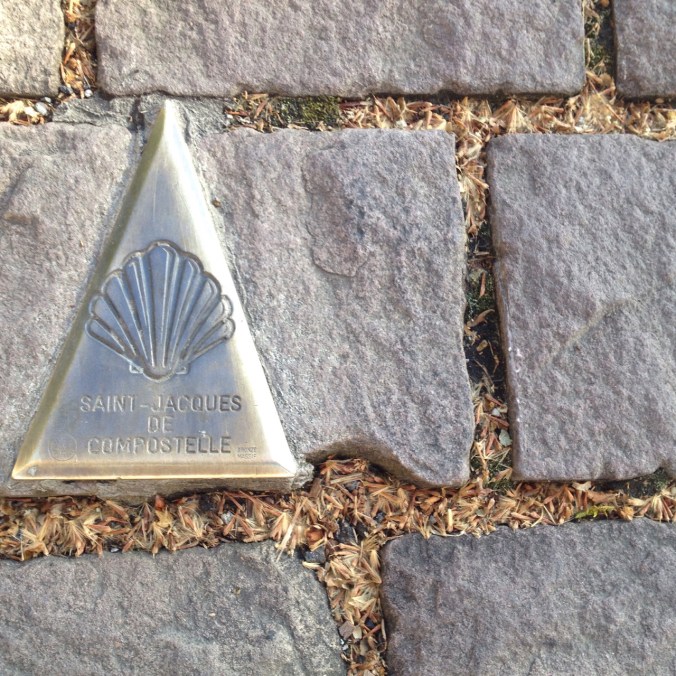
IMG_6128

Placards in the cobble-stone street marking the way.

Day One: We were up bright and early (5:45am), although we not the first ones up in the albergue.  Breakfast at the albergue was simple (bread and jam), but enjoyable if only for the stern (but very lovable) woman who ruled over the kitchen and wished everyone a “buen camino” on their way out the door.  The first day of the camino is known for its climb through the Pyrenees mountains.  We felt right at home as we climbed up the mountain (easier than the Sierras!) and were treated to amazing views (and only light rain)!

IMG_6133

As we climbed up above the clouds, the hills appeared to rise up as little islands.

IMG_6142

Only 765kms to go!

IMG_1333

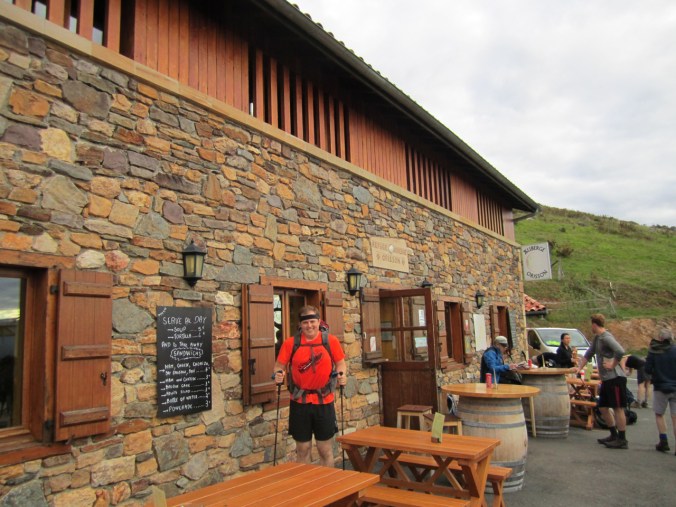
Getting ready to head out again after stopping for tea.

IMG_6135

IMG_6146

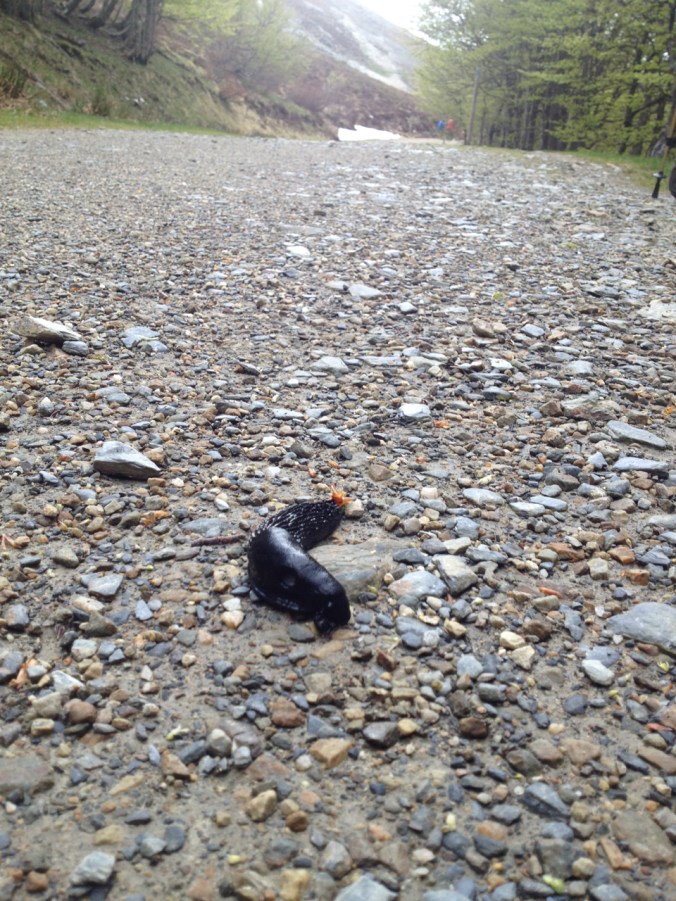
There were so many slugs!

We ended the day in Roncevalles, in part because it was the end of the stage in the Brierley guide to the Camino (which most English-speakers use) and because it is a historic stop on the Camino.  The stop ended up having a very weird feel to it.  We arrived before the albergue officially opened at 2pm and the administration of the albergue felt very bureaucratic compared to my prior experience on the Camino in 2012 (and the cold showers did not help matters — apparently the hot water was off until about 5pm).  The albergue also felt very isolated, although when we discovered the bar at a nearby hotel (that the albergue failed to mention existed), we happily enjoyed a bottle of wine to pass the time before our 7pm group dinner.  Following dinner, we enjoyed mass at the on-site church (but were confused to find that communion included no wine! As non-Catholics, luckily no communion papers were requested 😉 ).

Day Two: After the climb on day one, our second day started out reasonably flat before descending into Zubiri.  Much of the day was through forested land with good, dirt trails.  We stopped for tea and grocery shopping in the small town of Viskarret before tackling a small ascent in preparation for the big descent of the day.  A food truck and a short downpour greeted us at the top, meaning that the descent was a bit slippery at times (we passed one bicycler who had opted to walk with her bike and witnessed another completely wipe out on another slick turn).  We ended the day in Larrasoana at the municipal albergue, which was further than the recommended stop in the Brierley guide, but we wanted a short day three leading into Pamplona to maximize our time in the city.   The highlight of Larrasoana was a happy shop owner offering free samples of his family’s wine (and sampling himself), so of course we had to buy a bottle (for a whole 4 euro!). Michael also enjoyed the four barn cats who visited the back patio of the albergue, one of which knew how to open the door.

IMG_6148

Leaving France, headed towards Pamplona.

IMG_6150

We stopped to take a group’s picture and they insisted on taking ours as well.  At the time, we were walking with a guy from Edinburgh and a couple from Boulder, CO.

IMG_6155

The quiet streets of Larrasoana.

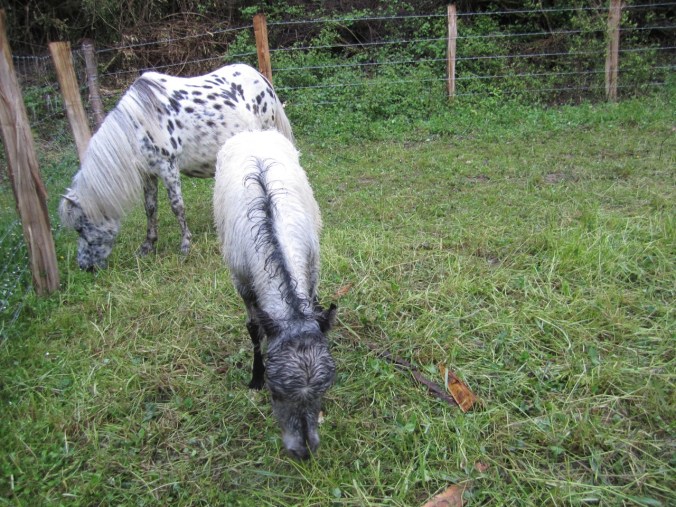
Day Three: The highlights of our short hiking day into Pamplona were the pen of miniature horses (so cute!!) that we passed and our decision to take an alternate route into Pamplona through one of the parks instead of via city streets. 

IMG_1334

Miniature horses!  There were a bunch and they were adorable.

IMG_1337

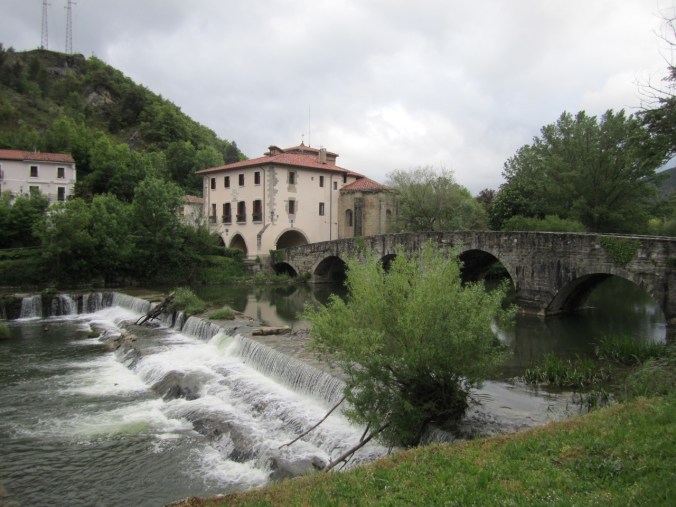
Bridge leading into Trinidad de Arre.  We bypassed the town to take the scenic park-route into Pamplona.

IMG_1338

The branches of the trees have grown together so that the trees are connected over the walkway.

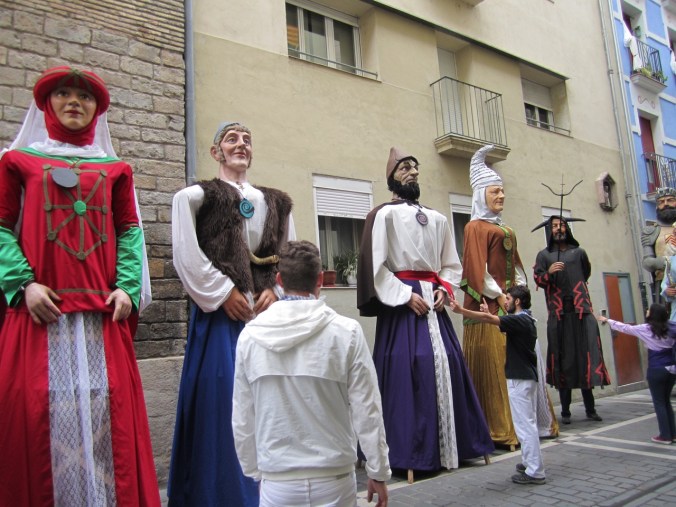
We ended up getting into Pamplona by about 10:30am to find that all of the private albergues were already full due to the convergence of a triathlon, local festival, and food festival that day.  This meant waiting until the municipal (first come, first serve) albergue opened at noon.  While waiting, we were treated to performances by the gigantes (giant, um, just look at the picture below) celebrating the local festival — what a treat!  Check out our short video of the dancing gigantes here.  We spent the afternoon visiting the Navarra Museum and Pamplona Cathedral before getting a group together to watch a major soccer match at a local bar.  Dinner consisted of amazing tapas from an award-winning tapas joint (my favorite was the foie) and chocolate con churros (yum!).  Pamplona ended up being a great spot to spend the day, especially given the many festivities going on in town.

IMG_1342

Los gigantes in Pamplona.  These guys spent the entire day walking through the city streets performing.

IMG_6179

Some of our tapas: including the foie (left) and sea urchin (right).

Overall, after three days on the Camino we are feeling pretty good.  Our feet are tired and we are a little sore, but no major issues thus far!

Walking in Circles, Part 2: Moulay Idriss and Chefchauen

by Elizabeth

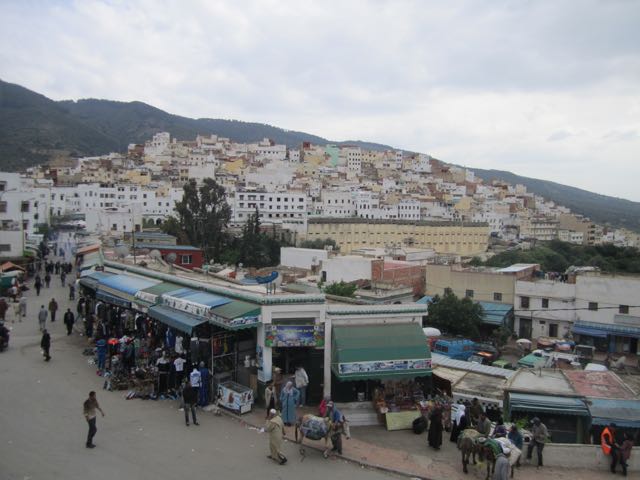
Following Fes, we decided to visit both the white and blue cities of Morocco.  First up was Moulay Idriss, the sacred white town on a hill.  In 789, Mousey Idriss I arrived in the town, bringing Islam to the area.  We were told that the town is still considered so sacred that if a Muslim visits Moulay Idriss six times during its annual festival, it is considered the equivalent of one Haj to Mecca.  Non-Muslims were only recently permitted to stay overnight in Moulay Idriss (in 2005), although they still cannot visit the mausoleum (a trend in Morocco).  Before that, non-Muslim visitors were advised to leave town by 3pm.

IMG_1286

Moulay Idriss from one of the viewpoints.

Continue reading

Walking in Circles, Part 1: Fes

by Michael

We arrived in Fes and did our usual walk to find a hotel. The problem with Fes (and many Moroccan cities) is that the hotels in the medinas (old walled cities) are on narrow streets behind nondescript doors. Even when we can find them, we can’t figure out if they are in our price range. And once you find a place, you must sit down and have some mint tea before you do anything else, then you can see the room, and maybe after that you can learn the price.

After visiting a couple places that were booked, we saw (and had mint tea) a place that we could have booked for about $35 per night. But we didn’t think it was a good value and wasn’t quite in the location that we wanted to be in, so we kept on. We went across the Fes Medina to find a better neighborhood but didn’t find the right type of doors. Many Moroccans tried to lead us to the “Funky Fes” (a cheap hostel) but we thought that wouldn’t be a good idea.

After at least an hour (we got so lost — literally going around the narrow winding streets in circles without seeing another hotel option), we found Dar Bensouda. The centuries-old building with a restored courtyard was gorgeous. We had to stay for the mint tea. And two nights.

IMG_5962

This place is gorgeous (now say it again with a British accent — it will seem even better)

Continue reading

What happens if it rains in the Sahara? You get wet.

by Michael

After an afternoon of shopping around in Marrakech, we booked our trip to the desert. We don’t usually book group tours – we try to travel the way locals do – but this ended up being much more efficient (in both time and money).

We joined a van with six other travelers, and we were off through the mountains. Before lunch we made it to Ait Benhaddou.

IMG_1110

Continue reading

Change of Plans

by Michael

[Due to poor Internet connections, we’ve fallen behind on our posts about Morocco.  We’ll get those up as soon as we can.  In the meantime, we thought a quick update about where we are now would be nice.]

Plans? What plans?

One of our three main targets on this trip is the Camino de Santiago. For those who are not familiar, it’s a centuries-old pilgrimage route to Santiago de Compostela in Spain. There are about a dozen routes with branches, but the most commonly walked route is from St. Jean Pie-de-Port in France, over the Pyrenees mountains, and across Northern Spain.

No, we didn’t cancel the Camino.

As I write this, we are on the train from Madrid to Pamplona, where we will catch a bus/taxi to St. Jean. We had originally planned to make our way there while enjoying various sights along the way, including crossing the Straight of Gibraltar and visiting the Guggenheim Museum in Bilbao.

Our tentative plan had always been to make our way through Morocco and cross the Straight of Gibraltar by ferry (Tangier, Morocco to Tarifa, Spain) then make our way across Spain in steps to the start of the Camino de Santiago. We got as far as Chefchaouen in Northern Morocco, but it seemed like too much: bus to Tangier, ferry to Tarifa, bus to Algecerias, then bus to Malaga, stop by the Picasso Museum, train to Madrid then Bilbao (or flight to Bilbao), Guggenheim Museum, bus to San Sebastian, 1-2-3 enjoy beach, bus to St. Jean. This would have taken a minimum of two days, probably more to enjoy it. And booking connections in Morocco can be difficult — everything is a negotiation and sometimes you still don’t get what you agree to buy. So we went the other way.

We took a bus four hours to the Southwest to Rabat and flew from Rabat to Madrid. It was not without difficulty at the Rabat-Sale Airport, but it’s a relief to be in Spain. Morocco is fun, but everyday interactions are more challenging. Spain is easier, especially since I can understand a lot of Spanish (and speak a little).

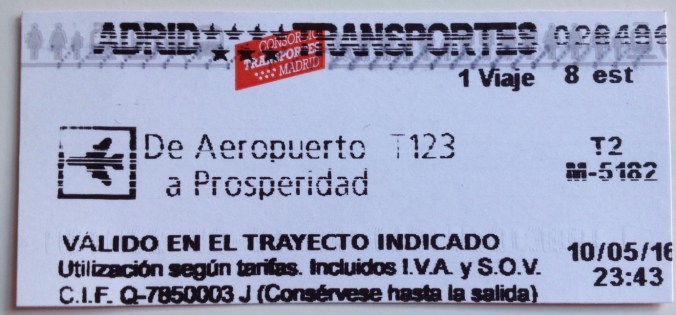
FullSizeRender_1.jpg

My ticket to prosperity.

This morning we did laundry, put about 1/3 of our stuff in a box and shipped it to Santiago de Compostela (to a service that holds shipped stuff for pilgrims — my compliments to El Correos (the post office) at Plaza Prosperidad in Madrid for being so helpful). Then we made our way to the train station and after a few failed negotiations with the ticket machine, we bought our tickets to Pamplona, a sandwich, and a beer. We are now on our way to the Camino.

FullSizeRender_2.jpg

On a train in Spain.

Update: As it turns out, wifi along the Camino has been a bit spotty. I was finally able to upload this post at the end of our second day on the Camino (in Larrasoana). We’ve had an easier time uploading pics to the Instagram feed in the meantime.

Avocado Juice or Lawyer Juice?

by Michael

In Morocco, some fruit juice stands have avocados. And some list avocado juice on the menu — though the menu is typically in French and maybe Arabic, so I can never be sure. But the idea of avocado juice, or maybe even an avocado smoothie, seemed interesting. I wanted to try it.

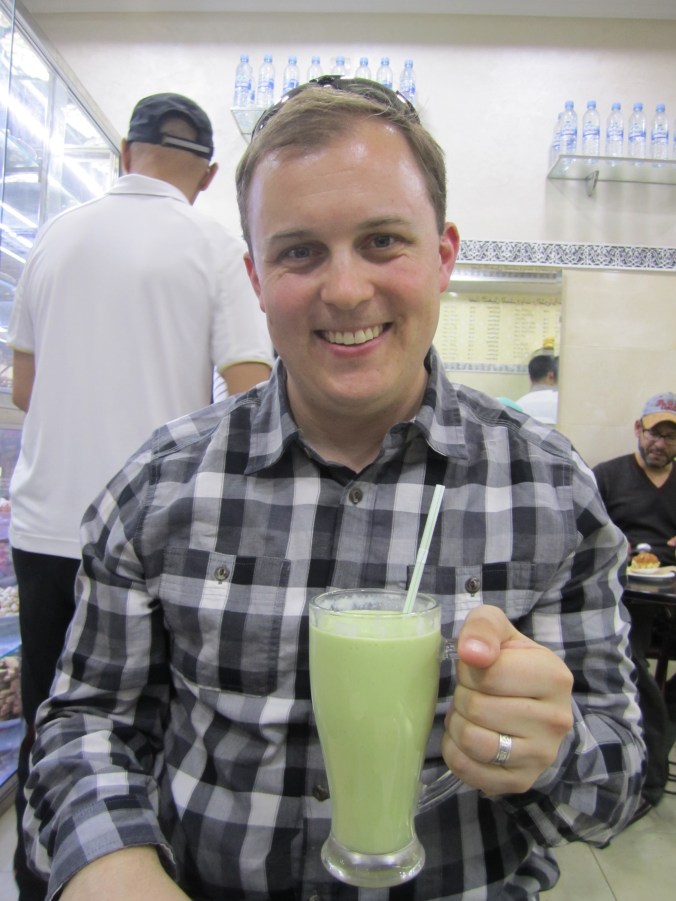
We sat down at a juice and sweets shop just off of the Souk in Marrakech. Jus d’Avocat was on the menu. Before we ordered, Elizabeth mentioned to me that she thought Avocat was the French word for lawyer. Were we about to order lawyer juice? After some difficulty, Elizabeth placed the order. I didn’t really think Elizabeth had so much trouble with the language that she ordered lawyer juice, but maybe the word was causing the confusion. Anyway, here it is:

Avocat 1.jpg

Continue reading

Summiting Toubkal: North Africa’s Highest Peak

by Elizabeth

After arriving back in Marrakech on our early morning bus from Essaouira, we turned around and hopped in a private van headed for Imlil.  We had identified Imlil, a small town in the High Atlas Mountains, as a good base for trekking in Toubkal National Park.  Although we typically prefer hiking on our own (and had a particularly odd experience using a guide in the Indian Himalayans), our limited research suggested that organizing and navigating a multi-day hike on our own would be difficult. 

IMG_1038

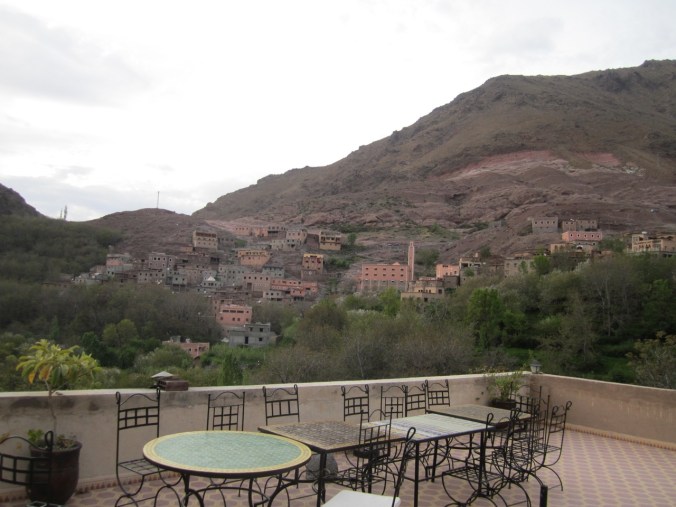
The wonderful view from the terrace of our first riad in Imlil.

Continue reading