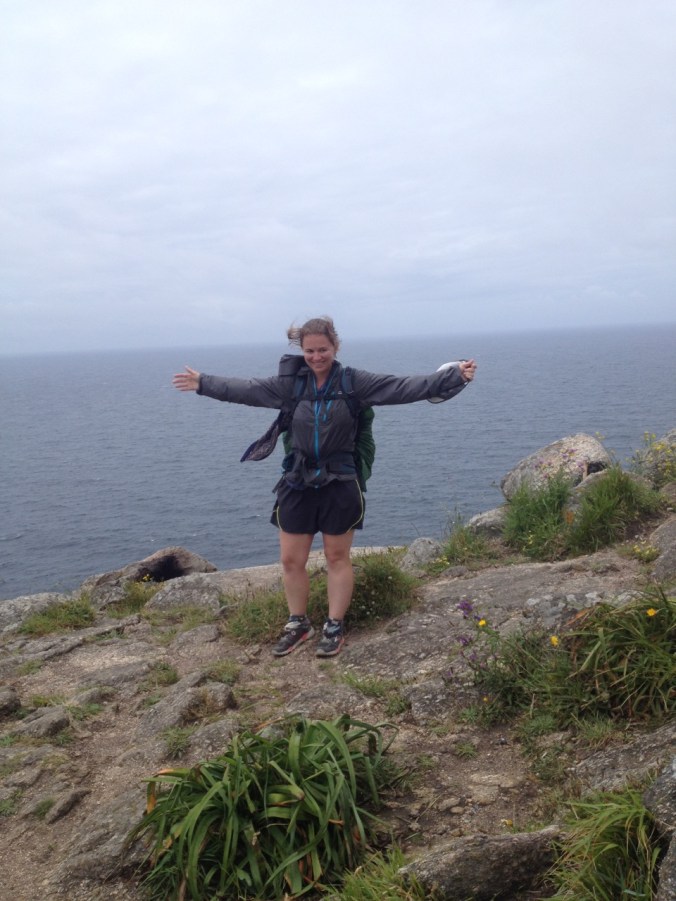
Soça Valley Hiking

by Elizabeth

Next stop in Slovenia was the Soça Valley, which is known for its beautiful mountains and roaring river.  We decided to base ourselves for our visit in Bovec.  The town is considered the adrenaline capital of the Soça Valley — a reputation illustrated by our hostel’s offered excursions for rafting, canyoning, kayaking, and skydiving.

IMG_2018

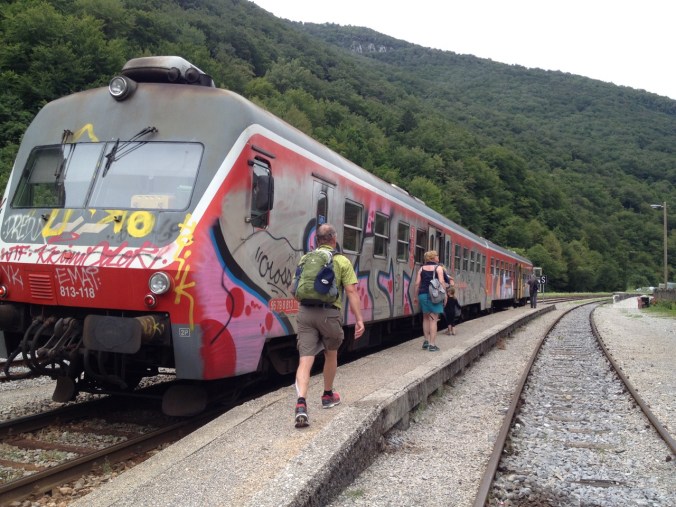
Our train was quite… decorated.

Our journey to Bovec was a bit confusing.  We booked the train from Bohinjska Bistreca to Most Na Soçi, which goes through a long tunnel connecting two valleys that are otherwise not directly connected by road.  The weird thing was that we were directed to get off the train after one stop (after the tunnel) and get in a bus.  We were then transferred back to the train a couple stops later with little explanation.  Our best guess is that some kind of track work was going on.  Our subsequent bus transfer from Most Na Soçi to Bovec went off without a hitch.

IMG_7816

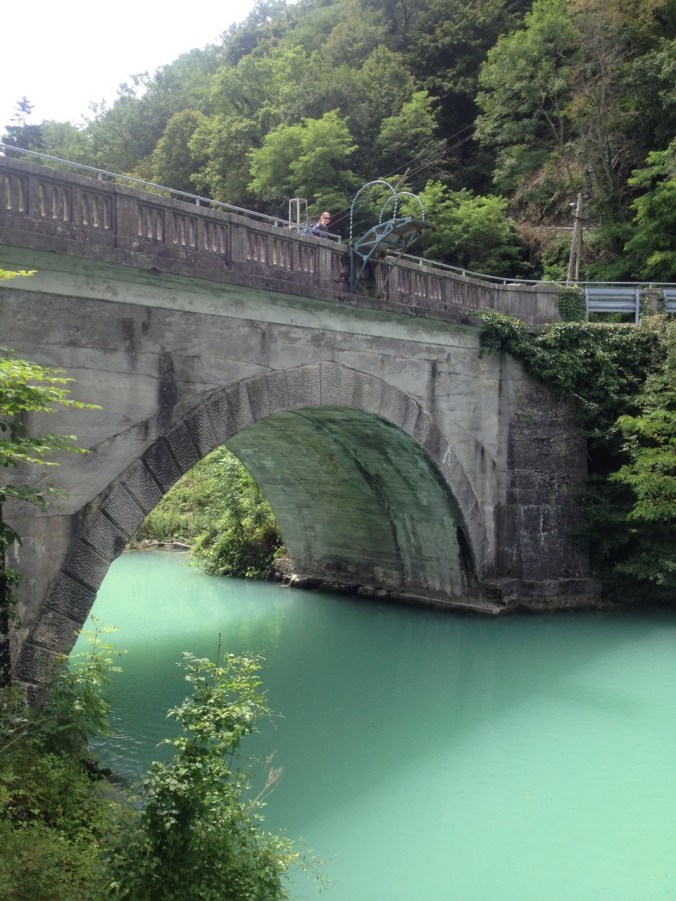
We stopped by the old bridge in Most na Soçi while waiting for the bus.  I had done a google image search of Most na Soçi and was expecting a much more scenic town/bridge.  I’m not sure I would have bothered with the 2km walk into town from the train station had I known that there wasn’t much there, but luckily there was a second bus stop in town so we didn’t have to hike back.

Our original plan was that we would take advantage of the great rafting available in the Soça Valley.  Unfortunately, due to my biking accident I was unable to raise my right arm (very sore shoulder) and my left elbow was in a lot of pain.  We decided to stick with hiking and go rafting in Bosnia instead.  We were excited to hear about the Soça trail, which goes 25km from the source of the Soça river back down to Bovec.

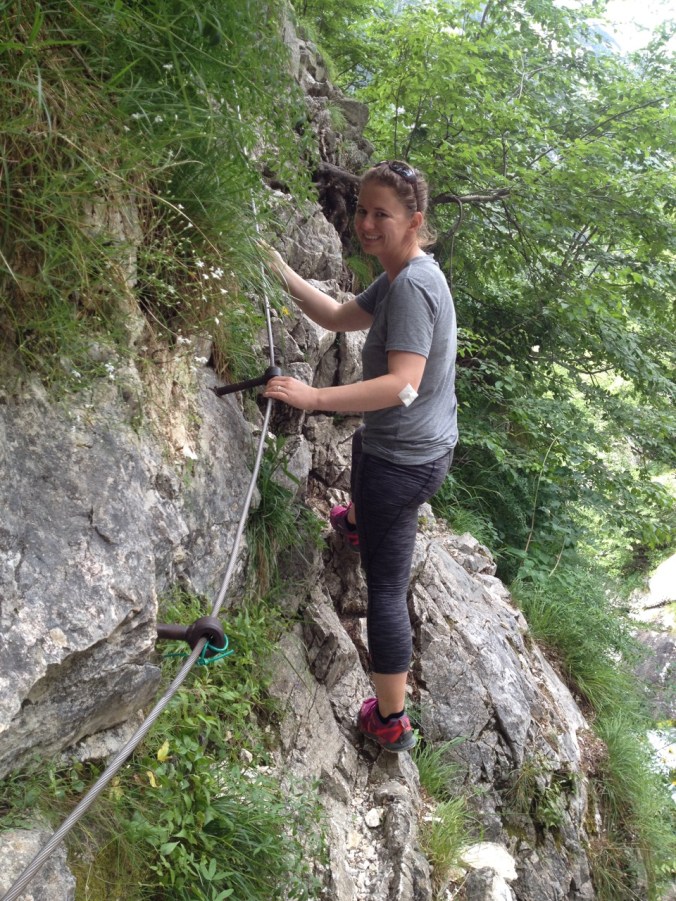
The next morning, we caught the bus up to the source of the Soça river.  Visiting the source itself was not part of the Soça trail, but we decided that since we were there we might as well see it.  Turns out that getting up the trail to the source required some climbing/reliance on steel cables to get around large rocks.  We ended up turning back short of the source because it was too sketchy/uncomfortable with my hurt shoulder/elbow/hand.  Due to the bus schedule and time spent heading up to the source, we didn’t actually get on the Soça trail until about 11am — a bit later than our accustomed start times on the Camino.

IMG_7827

Trail up to the source.  This section was a bit tricky with two-way traffic.

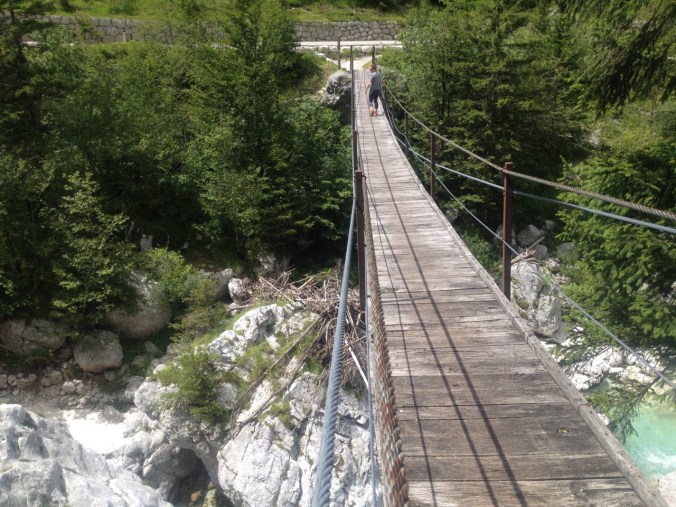
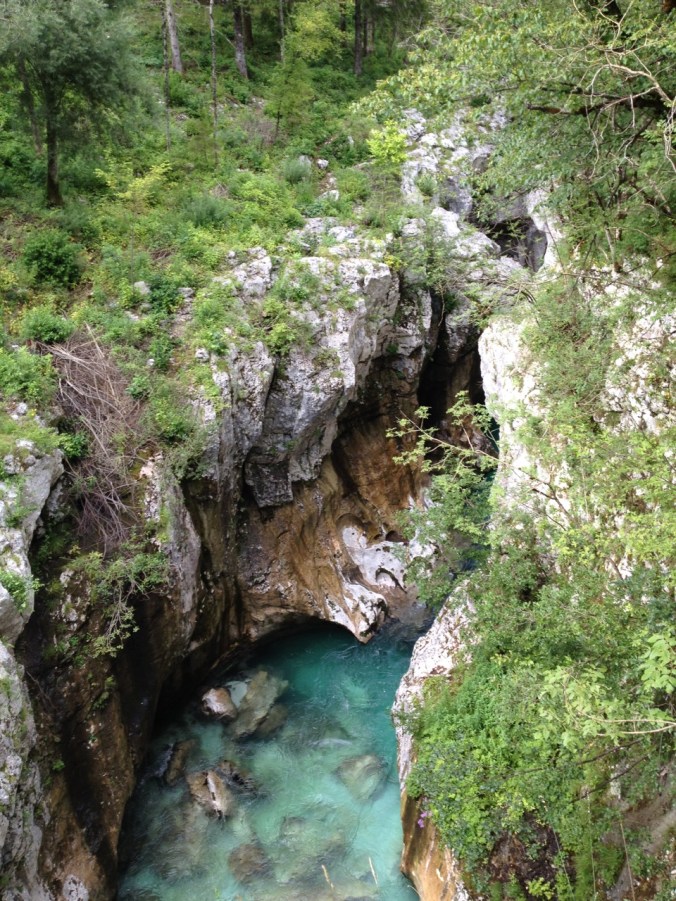
For what was advertised as a largely downhill trail, the Soça trail had quite a bit of ups and downs (or PUDS — “pointless ups and downs”).  The trail largely follows the Soça river, crossing it several times on foot bridges.  We stopped mid-afternoon at a small restaurant (the only one that we saw on the trail) for beers and cherry cake.   We also passed by a cool gorge that provided some awesome views.

IMG_7842IMG_7861

While we enjoyed the Soça trail, we ran into two problems.  The first is that the trail frequently dropped hikers back on the road (or climbed up to the road/shoulder parking area only to climb right back down).  Near the end of the trail, we found ourselves dumped on the road and never figured out where we were supposed to climb back down.  This left us on a narrow, winding road with limited shoulder space for awhile.  We think that we may have made a wrong turn a couple kilometers before, but it’s unclear — the clear trail markers had disappeared at that point. 

IMG_7871IMG_7869

The second issue is that we are pretty sure that the trail is not 25km as advertised.  Michael turned on the Strava app when we started walking and it tracked our route using the phone’s internal GPS.  With several kilometers left before we got back to Bovec, the app indicated that we had already walked about 30km.  Had we known the trail was longer, we would have tried to get an earlier start.  Since it was getting late and we ended up dumped out on the road, we decided to try to hitch a ride back to Bovec (hitching is very common in this area).  A young Swiss couple soon stopped to give us a ride (after rearranging the bicycles in the back seat).  Even though it wasn’t far to Bovec, we were happy to avoid further road walking — we were exhausted!

IMG_7834

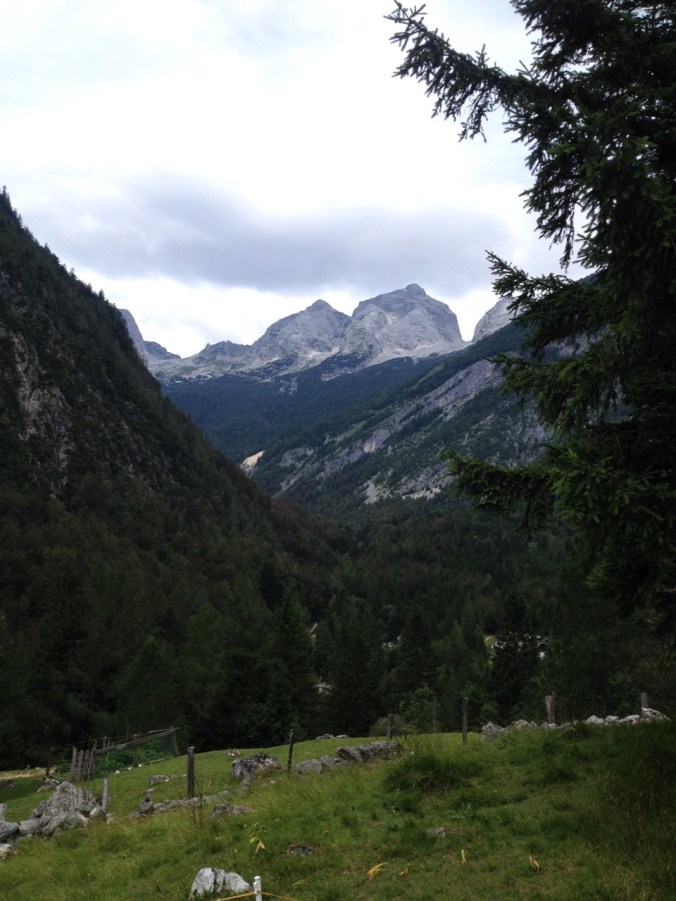
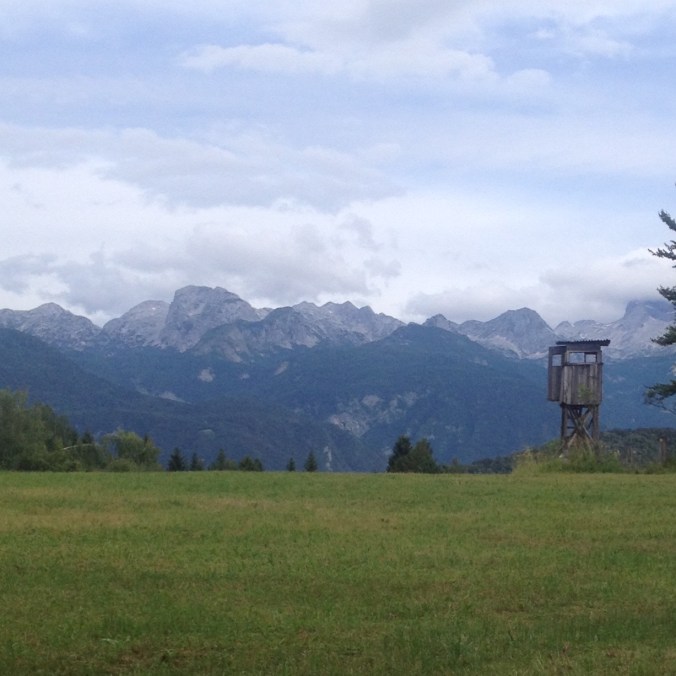
View of the mountains along the Soça trail.

Although Soça Valley was beautiful and we had contemplated potentially staying longer, we decided to limit our stay to two nights in order to finally make our way out of the Schengen area.  Our hope was also that after a few days rest, I would be up for rafting and more hiking in Bosnia.  The next morning, we caught a bus over Vrsic pass and back to Ljubljana so that we could catch an early morning trail to Sarajevo.  Of course, this meant that we got to enjoy another lovely evening enjoying Ljubljana’s good food and craft beer.  Perfect!

IMG_1664

Michael at Vrsic pass.  The view was amazing!

IMG_7884

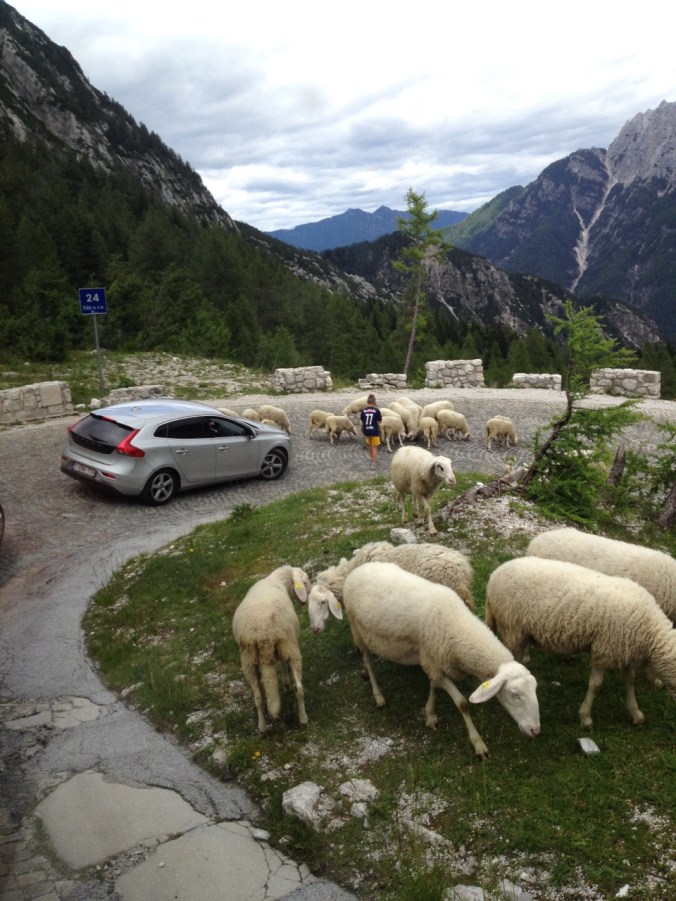
Traffic jam coming down from Vrsic pass…

[We’re making an attempt to finally get caught up on getting our blog posts up.  This post describes our visit to the Soça Valley on July 15-17, 2016.]

Hiking in the Julian Alps: Lake Bohinj versus Lake Bled

by Elizabeth

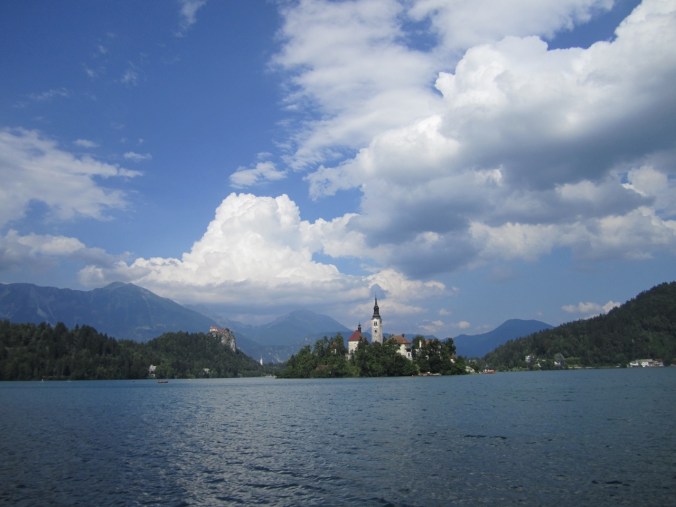
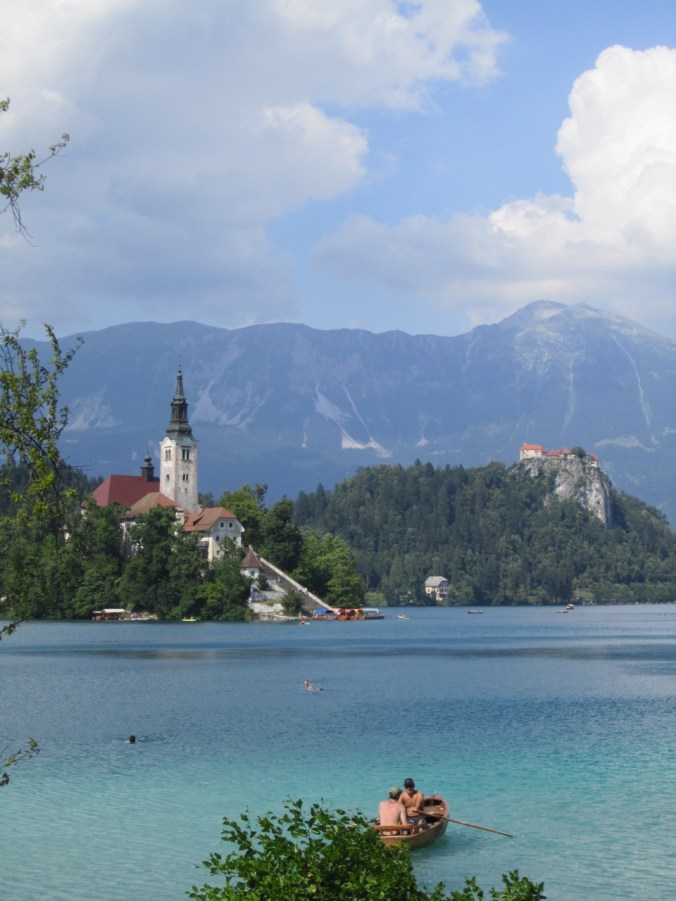
One of the iconic images advertising travel in Slovenia is the church topped island sitting in the middle of Lake Bled: 

IMG_1636

Beautiful Lake Bled

When we decided to come to Slovenia, we knew that Lake Bled needed to be on our itinerary.  Then we heard about Lake Bohinj.  Located about 30km from Lake Bled, we heard from multiple people in Slovenia that Lake Bohinj was actually more beautiful than Lake Bled and offered better hiking options.  The price and availability of (last-minute) accommodation ended up making the decision for us — we headed to Bohinjska Bistreca (in the Lake Bohinj area) and planned to day-trip to Lake Bled.

Our apartment in Bohinjska Bistreca was located just outside of the small town on the second floor of a large house.  For only 50€ a night, it was a bit more than we’d been hoping to pay but was well worth the money.  The large deck patio was a perfect spot for eating meals and enjoying the sunset.  Our host was nice and cheerful, and even though she only spoke a few words of English and we could only speak a few words of Slovenian, we managed to make all the necessary introductions. 

IMG_2015

View from our private deck.

IMG_7674

We took advantage of the apartment’s kitchen to make burritos!  We’ve been missing Mexican food.  Even though some of the ingredients that we found are a bit off (“Mexican beans” turned out to be kidney beans), it hit the spot.

On our first afternoon, we picked up a bunch of groceries and stopped by the tourist office to purchase the Bohinj Guest Card.  It ended up being quite the deal.  For only 10€ each, we got free local bus transportation (including to Bled on certain buses), free entrance to several sights, free electric bike rental, and free transport on the tourist boat crossing Lake Bohinj (priced at 9 euro per person).  We also picked up a helpful map showing the various hiking and biking routes in the Bohinj area. 

IMG_7755

We enjoyed this great view on our daily short walk from our apartment to the local bus stop.

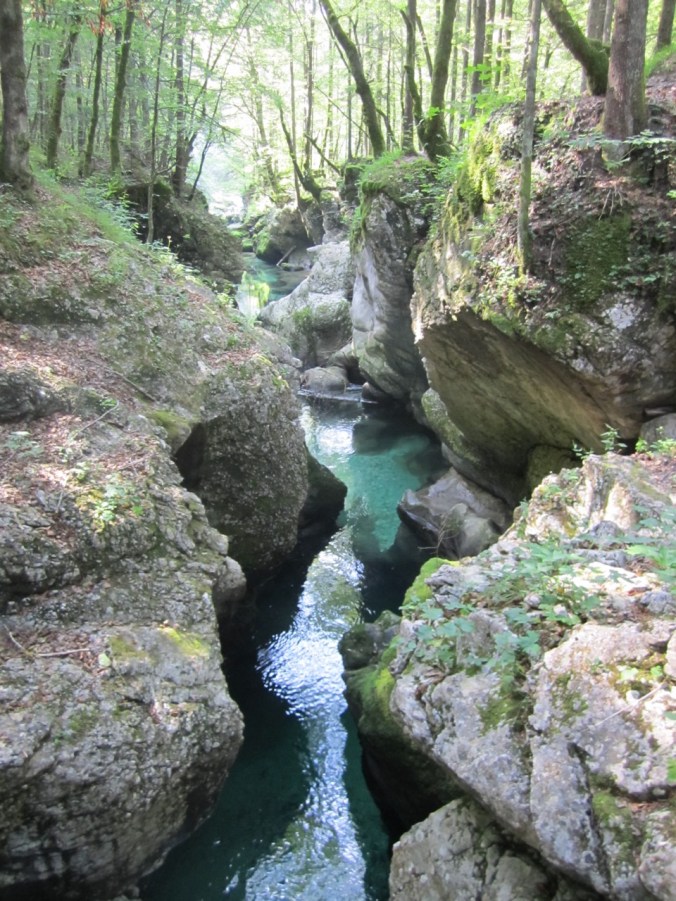
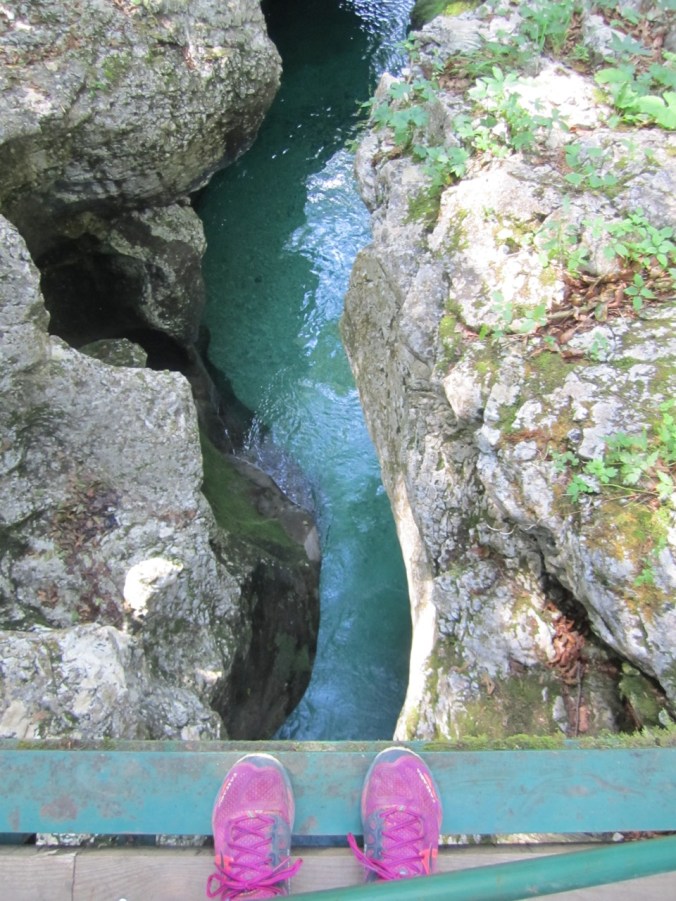
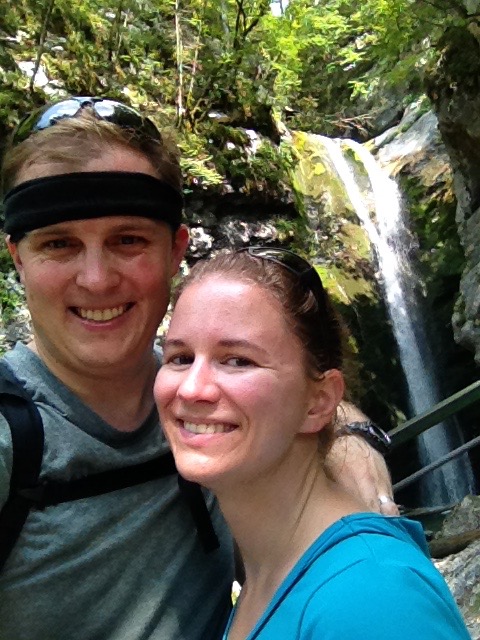
In the morning, we caught the bus to Stara Fuzina and hiked up to the Mostnica Gorge and Waterfall (free entrance with Bohinj Guest Card).  The gorge was beautiful — deep with curved walls formed by the water’s pressure and various shades of blue water.  On our return from the waterfall, we stopped for beers and blueberry cake at a small restaurant in the hills.  We then managed to take a wrong turn and ended up heading back on a small road, with group after group of a children’s summer camp passing in the other direction.  We rejoined the main path back at the entrance station and actually headed back up again to see the gorge from the other side (our intended path before our wrong turn).  Worth the detour as I think that we actually got a better view of the gorge on our return path.

IMG_7679

View on the way up to the gorge and falls.

IMG_1620

Crossing the Mostnica gorge on a footbridge.

IMG_1622

Looking down at the Mostnica.  The blues in the water were amazing and impossible to capture.

IMG_7700.jpg

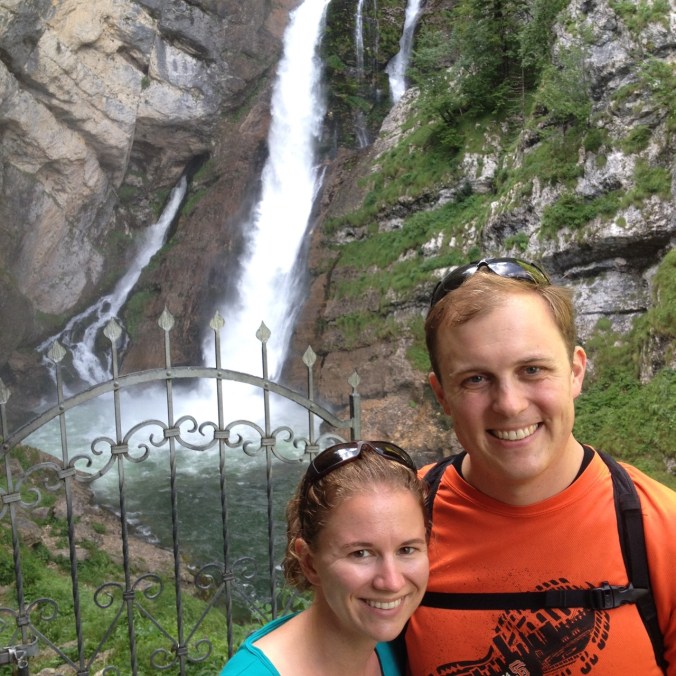
Selfie at the waterfalls.

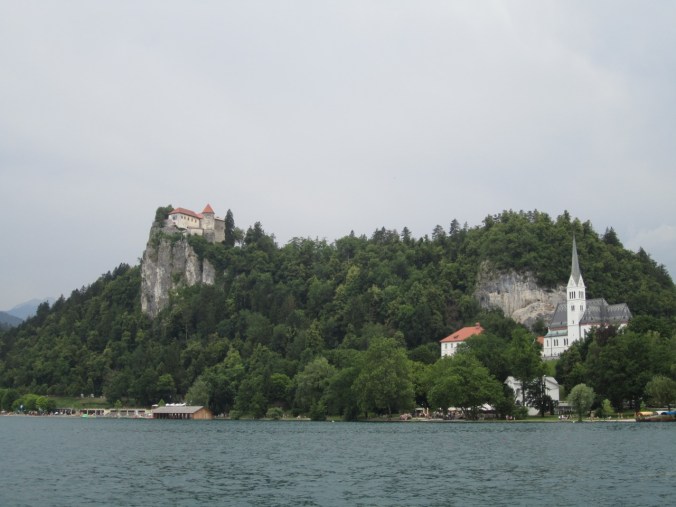
Upon returning to Stara Fuzina, we decided to head over to Lake Bled for the afternoon since rain was forecasted for the next few days.  We walked to Lake Bohinj to catch the bus (unfortunately ending up on a bus not covered by our pass — oh well) and enjoyed the short ride to Lake Bled.  We spent the afternoon walking along the path around the Lake.  Lake Bled is rightfully popular.  The lake itself is beautiful and the church on the island in the middle is picturesque — offering a great view/photo op from every angle. 

IMG_1635IMG_1643

IMG_1628

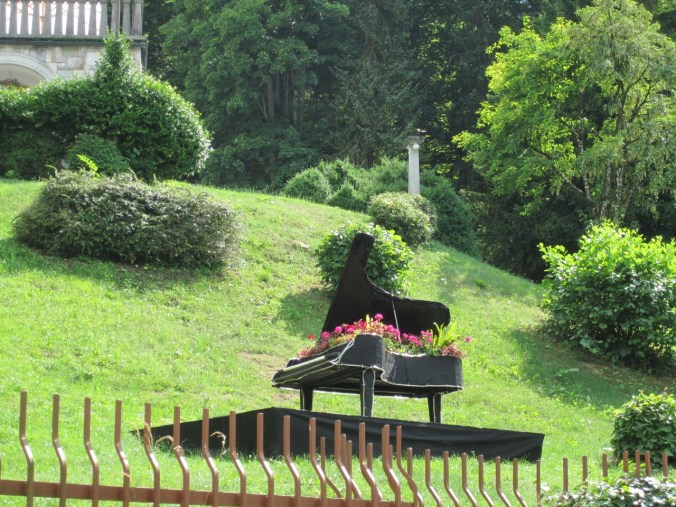
Random grand piano flower planter along Lake Bled.

Since we weren’t interested in visiting Bled castle up on the hill or the island in the middle of the lake, other than a swim in the lake and our walk there wasn’t much to do.  We were content with our visit, but ultimately fell in love with the less touristed Bohinj area.

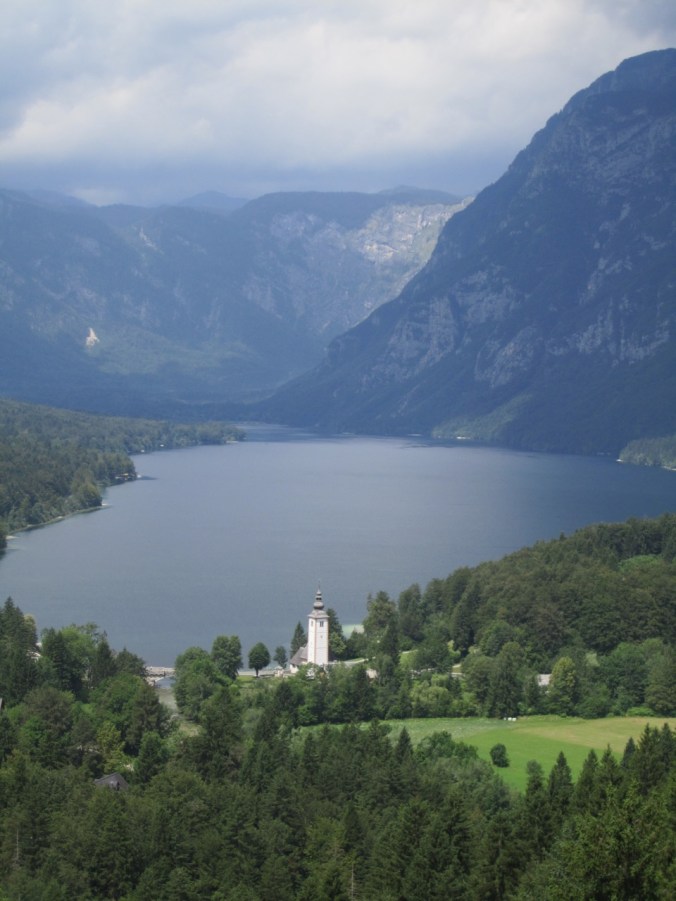
On our second full day, we hiked up Rudnica, a tall hill in the middle of the Bohinj valley.  The hike offered a nice challenge with about 1300 feet in elevation gain over 4.5km (9km roundtrip) in what felt like very humid weather.  We lucked out and, although we heard thunder in the distance, there was no rain.  The view from the top was great!  After our hike, we caught the tourist boat across Lake Bohinj (complete with commentary from the guide) and enjoyed a nice late lunch at a popular trout restaurant in Ukanc.

IMG_1646

View of Lake Bohinj from a viewpoint on the way up Rudnica.

IMG_7736

Crossing one of a few meadows on the Rudnica trail.

IMG_7728

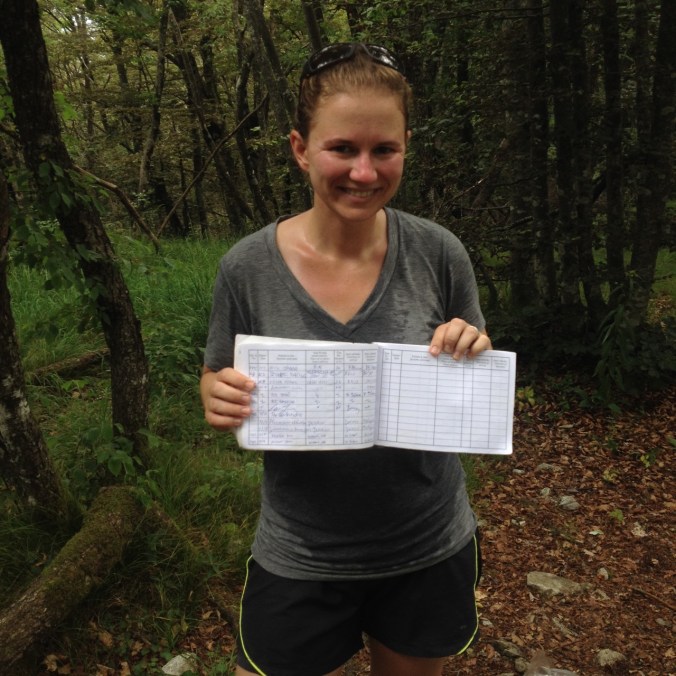
Signing the trail register at the top of Rudnica — funny since it wasn’t even 1000 meters tall.

IMG_1648

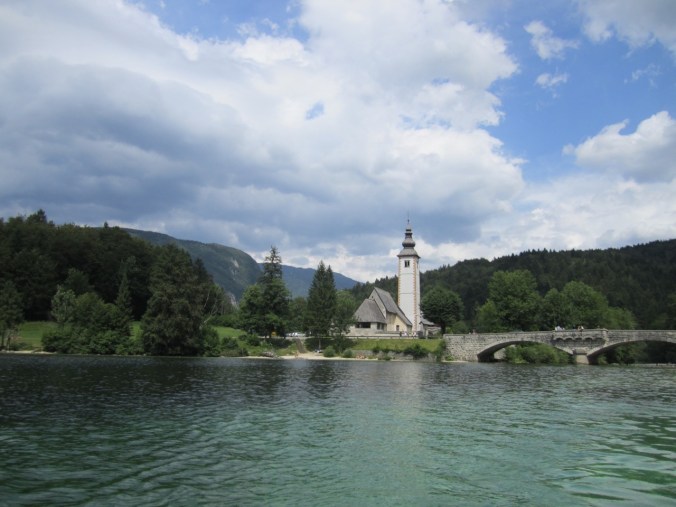
View from the tourist boat on Lake Bohinj.

One of the benefits of the Bohinj Guest card that I was excited to try out was the free electric bike rental.  We couldn’t get a reservation until our third day, but it looked like we had lucked out and the threat of rain had fizzled/passed.  We picked up our bikes in the morning from a local camp’s reception office — a bit weird since they had a sporting/adventure office that rented normal bikes.  The lady who gave us the bikes didn’t seem to know much about them and didn’t have any helmets.  We went to the normal bike rental office to borrow a couple helmets and their bike pump, since Michael’s bike basically had a flat tire.  Foreshadowing?  Probably.

As it turned out, we could never figure out how to turn on the electric bike feature on Michael’s bike.  Mine worked, but I found it disconcerting that it would turn on to give me extra power at random times (and not at my direction).  I also found it difficult to turn the feature off.  I decided to only turn on the electric feature on uphills, as the bikes were extra heavy due to the motor.  Of course, after we set out it also started to rain lightly.  On one of the subsequent downhill turns (after the electric motor was off), I lost control of my bike (and its not so awesome brakes) and ate it.  On later inspection, the front bike wheel was at a 90 degree angle and somewhat easily turned back into place, which is somewhat consistent with my memory that the front on the bike was going crazy shortly before my crash.  Luckily, I didn’t hit my head.  Unfortunately, I was bleeding quite a bit from my left elbow and palm.  I got off the path and laid down since I felt faint (normal for me when blood is present).  A passerby walking his dog asked if I was okay and, not believing our response that I’d be fine, offered us a ride back to our apartment.  Michael hid the bikes, locking them to a tree and we accepted the ride (from a woman who lived nearby that the passerby knew).  I was glad that we did, as I was in a lot of pain and felt like crap.

IMG_7760

The culprit.

When we got back, Michael bandaged me up with the assistance of the first aid kit that our host brought up after seeing us return (no English needed!).  On further inspection, it turned out that I was also lucky to have worn leggings instead of shorts, as I likely would have scrapped up both knees had I not.  I also had the beginnings of what would become a large, ugly bruise on my thigh (handlebar? unclear).  While I rested, Michael went to retrieve my bike.  He very much enjoyed the electric motor’s help on the uphills and flat spots, but confirmed that the brakes didn’t seem especially great.

IMG_1651

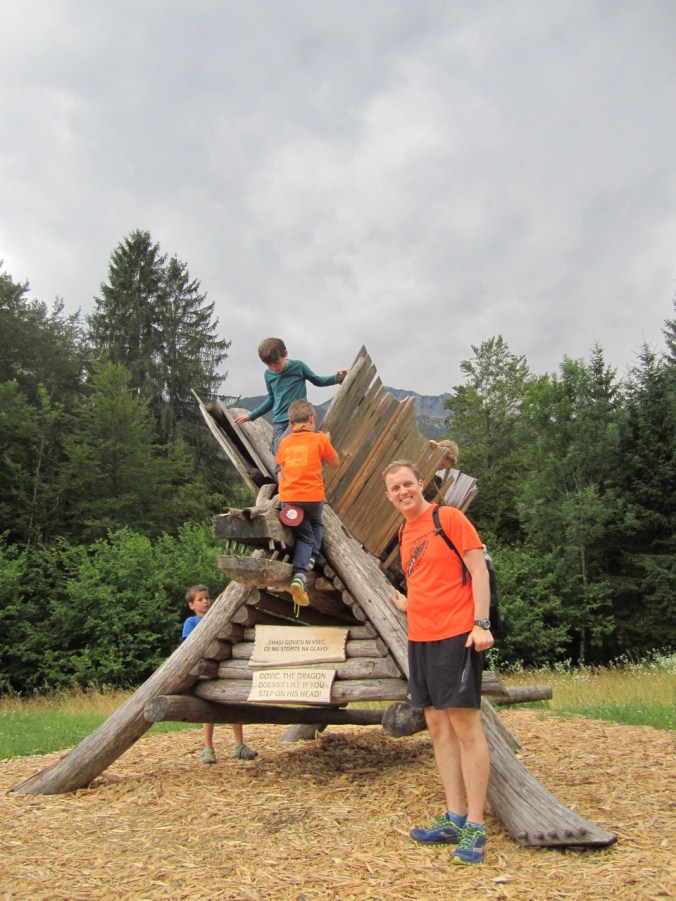
More dragons.  Michael wanted me to take a picture of the dragon by itself, but since there were kids there I figured it would be less creepy if he was in the picture.

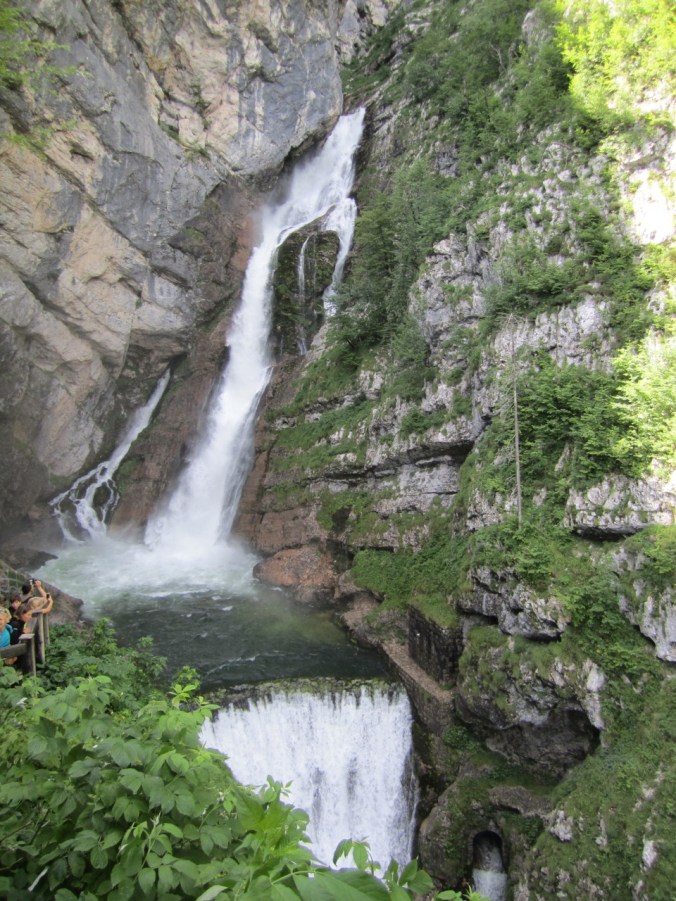
Since I felt better upon his return, we took the bus back out past Lake Bohinj to the Savica waterfalls (another free entrance with the Bohinj Guest Card!).  There is about 500 stair steps to get up to the falls, but the view at the end was nice.  While I took the bus all the way back to Bistreca (where we stayed), lucky Michael had to stop to pick up the second bike to ride it back.  What a good sport 😉

IMG_7773

IMG_1652

On our final day in Bohinj, our train ride out to the Soca Valley left us just enough time to fit in another hike — this time a morning hike through the woods and back past farms with cows and goats. 

IMG_7791IMG_7793

We could easily have spent several more days in Bohinj.  There were so many more hikes to do and, even without a car, everything was relatively easy to get to.  We are definitely putting this on our list of places to return to!

[We’re making an attempt to finally get caught up on getting our blog posts up.  This post describes our visit to Lake Bohinj and Lake Bled on July 11-15, 2016.]

I <3 Ljubljana

by Elizabeth

Within hours of arriving in Ljubljana — Slovenia’s capital — Michael had declared (several times) that we should move there.  The city is great.  On a small scale, it’s like San Francisco or Portland walked into an Etsy shop.  Lots of great food, craft beer, and plenty of “made in Slovenia” signs on every street.  The old town area was closed to car traffic a few years ago, giving it an idillic feeling.  Everyone is out and about — strolling along the river, sipping at a spritz at one of the many outdoor cafes, or enjoying an ice cream. 

IMG_7670

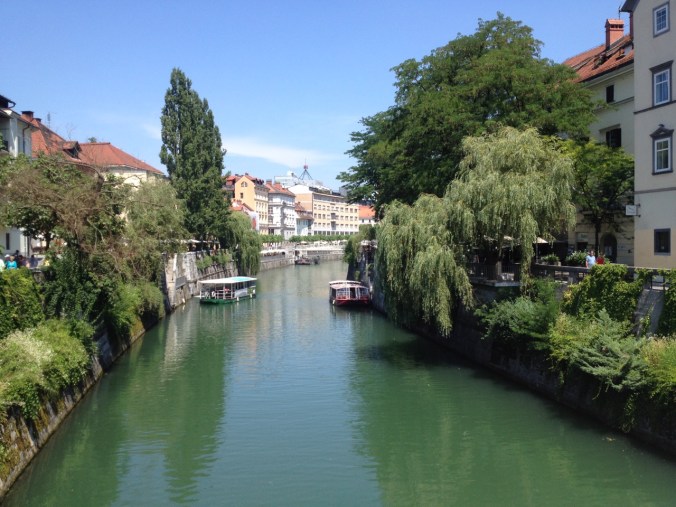
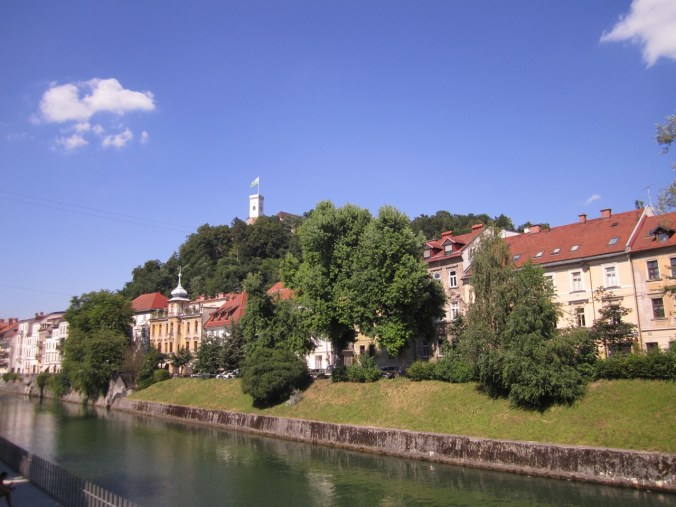
Central Ljubljana straddles  the Ljubljanica River and ensures that there are enough riverside spots for everyone to enjoy.

IMG_1615

The Ljubljana Castle sits on the hill just above the old town.

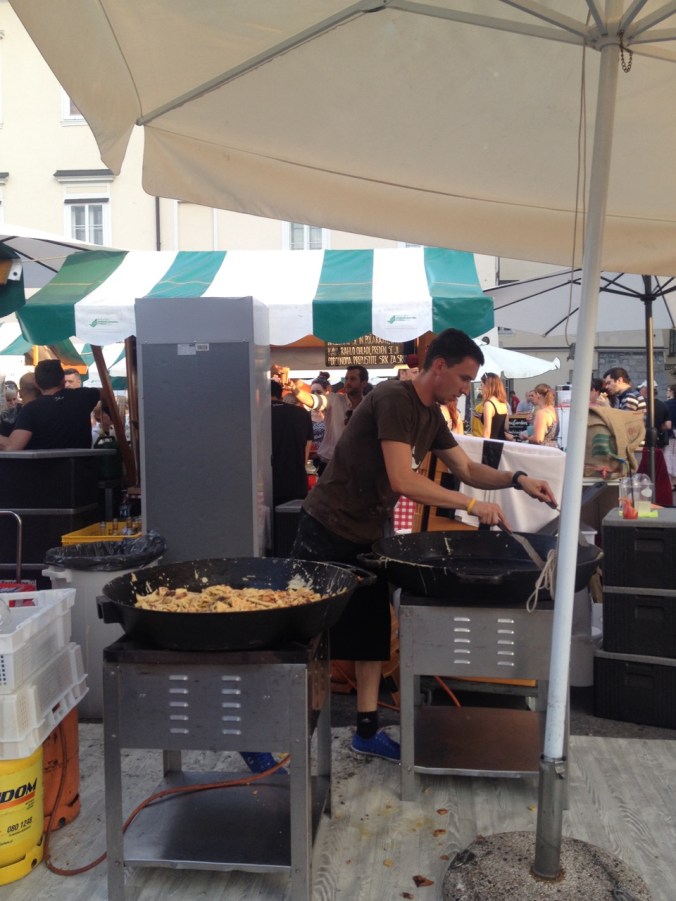
On our first evening, we stopped by “Open Kitchen,” where a bunch of restaurants had set up food stands in the market square (similar to Off the Grid in SF, but without the food trucks).  We were able to try out several Slovenian dishes, including a ravioli-like pasta stuffed with potato in a truffle sauce, a sparkling red wine, and a grilled dough-like dessert topped with berry compote.  So good! 

IMG_2005

Friday night in Ljubljana at Open Kitchen.

IMG_2006

Our doughy dessert was made in huge woks, complete with a caramelized sugar crust.

Our multi-stop dinner at Open Kitchen was complemented by a public music performance in a nearby square.  The large band included players from all over the world on strings, trumpets, drums, etc.  Ljubljana instantly felt comforting and beautiful.

IMG_2007

A glimpse of the evening’s musical performance.  We’d probably been watching for a half hour already when this singer stepped out with a baby strapped to her back and a toddler at her side.  She declared that Italian families stick together!

The next morning, we visited the Ljubljana castle.  Perched atop the hill in the middle of Ljubljana, the castle felt like it was always present as we walked around old-town Ljubljana.  The complex is open to the public for free, although there is an entrance fee if you want to visit any of the museums inside. 

IMG_1589

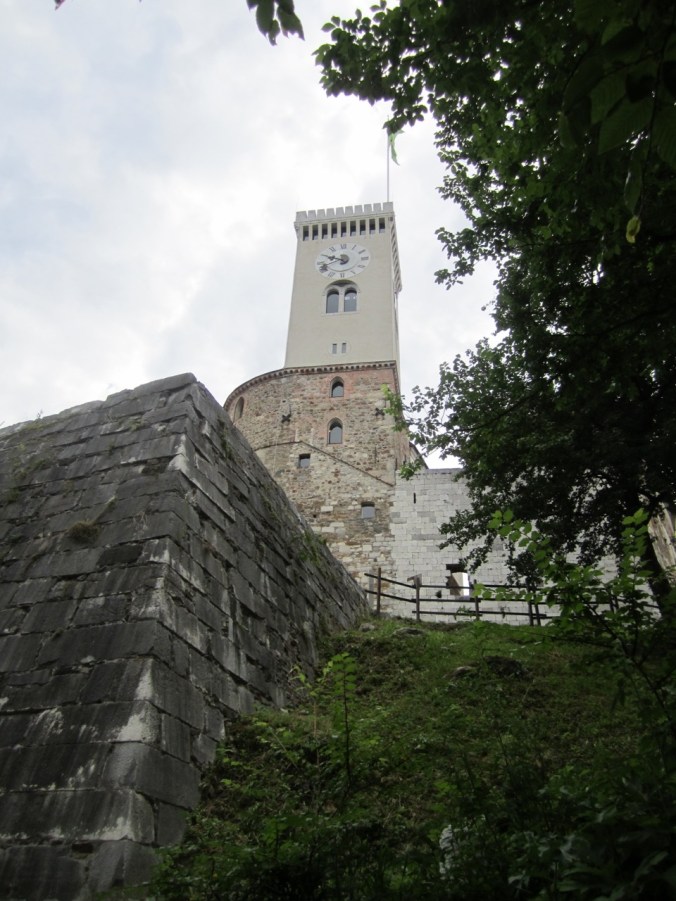
View from the walk up to the castle — we’re almost there!  There is also a funicular, but that costs money 😉

IMG_7651

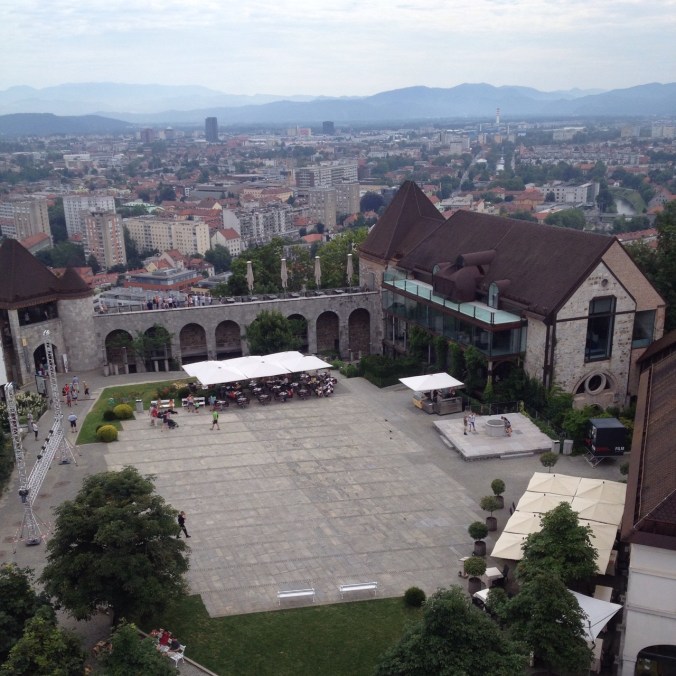
Looking down on the castle complex.  On the left, you can see the set-up for the evening film under the stars that we attended later that night.

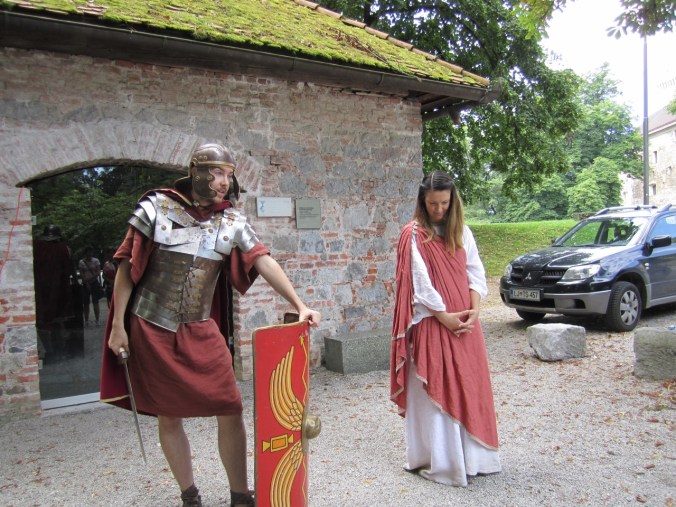
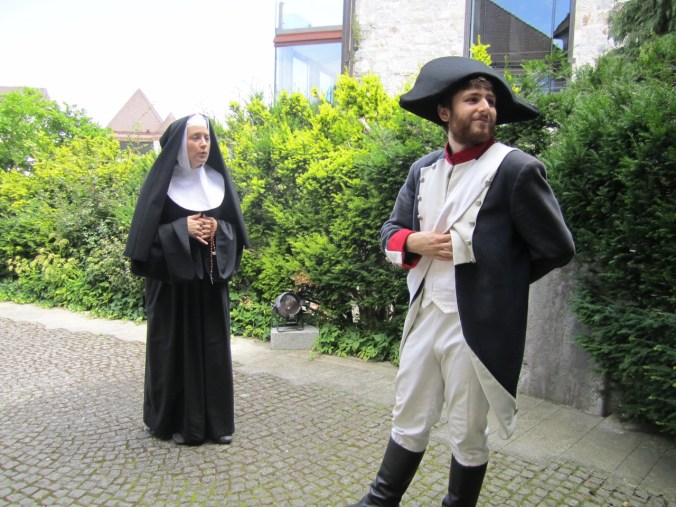
We opted to spend an extra 2.50€ above the basic entrance fee to join the castle tour (called the Time Travel tour).  It ended up being very different from your ordinary guided tour (which we join infrequently).  Throughout the tour we were met by various “characters” from the history of the castle, who told us a bit about their lives and the castle.  They wore period costumes and told us different perspectives on their history. Well worth the extra cost!

IMG_1594

A visit from the Romans.

IMG_1603

Tales of the conflict between a Napoleonic soldier and a Catholic nun.

IMG_1605

Creepy puppet featured at the otherwise, child-centric puppet museum at the Ljubljana Castle and included in the general ticket price.

In the afternoon, we met up with the Slovenian woman who we’d met on the Camino (on day 8) and who’d helped us with various tips about visiting Slovenia.  It was great to see a familiar face and to hear about the rest of her Camino.  She recommended visiting Lake Bohinj and Soca Valley in Slovenia, and Vukov Konac in Bosnia (all of which we visited later and enjoyed).  After our visit, we rushed back to our hostel to pop some popcorn and grab a couple beers before heading back up to the castle for its summer film under the stars series.  It was a perfect evening to sit and watch The Nice Guys, which was a funny, lighthearted film (in English!).  There was even free ice cream as we entered (and exited)!

IMG_1609

Michael with the mascot of Ljubljana — a dragon.  As with many other European cities, the history of the Ljubljana castle is filled with stories of dragons.  For anyone familiar with dragon lore, this of course means that St. George makes an appearance to slay the dragon.

IMG_7747

More dragons! This one is on the “Dragon Bridge.”

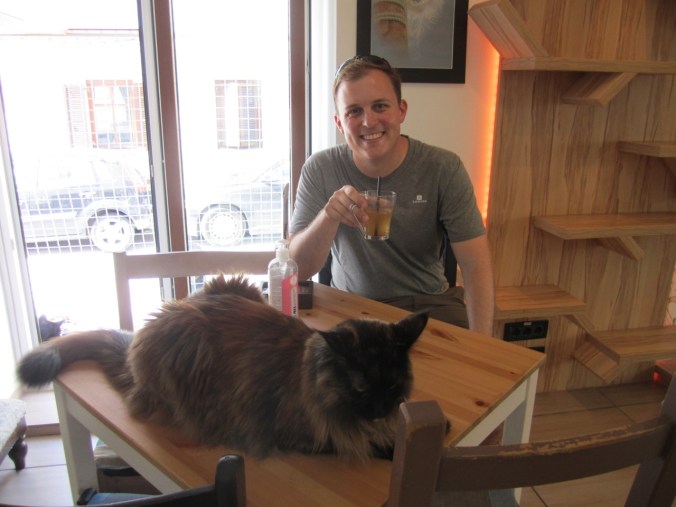
Between planning our next steps (so time consuming!), we spent the next day and a half in Ljubljana exploring Park Tivoli (unfortunately it was super hot), enjoying a horse burger, visiting a cat cafe, wandering through Metelkova Mesto (an ex- army garrison taken over by squatters/punks in the 1990s to create a spray painted and artsy commune, now mainly a club/bar scene), finding a favorite ice cream spot, and generally walking around the lovely old-town area.

IMG_7618

Horse burger from Hot Horse.  Surprisingly tasty.

IMG_1614

Obviously, Michael was a fan of the cat cafe.  And no, that’s not an optical illusion/weird perspective — that cat is huge.  Easily a 20 pound Maine Coon.

IMG_7645

More cats at the cat cafe.  These three had funky fur that was extra fun to pet.

IMG_1617

Underwater-themed art in Metelkova Mesto.

IMG_7658

Another art piece in Metelkova Mesto.

Needless to say, we thoroughly enjoyed our time in Ljubljana and would encourage others to visit.  Had we not been concerned with the length of our Schengen stay, this is another spot where we could have easily spent more time.

IMG_2010

Michael loves Ljubljana!

[We’re making an attempt to finally get caught up on getting our blog posts up.  This post describes our visit to Ljubljana on July 8-11, 2016.]

Slowing Down in Slovenia: Piran & Skocjan Caves

by Elizabeth

After an exhausting stay in Barcelona, we were ready to take it easy in Slovenia.  The cheapest way to get there turned out to be a flight from Barcelona to Trieste, Italy, followed by a short bus connection.  Our early morning taxi to the airport and flight were uneventful.  We were able to hop on a bus from the airport to the Trieste bus station fairly quickly.  Bus station looks the same as it did five years ago when we sat around waiting for our bus to Croatia (coming from Venice) — still run down and sort of sad, but functional.  We had a few hours before the direct bus to Piran on the Slovenian coast, so we wandered around Trieste for a bit and ate some focaccia.

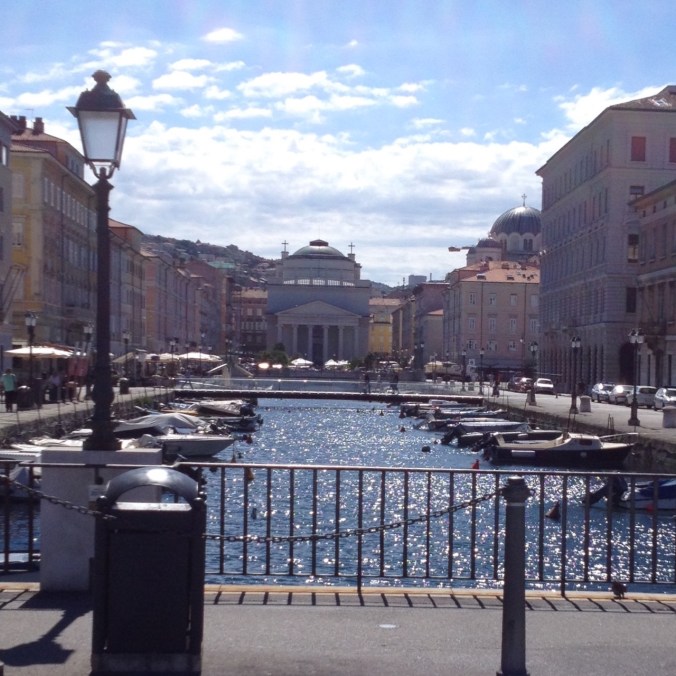
IMG_7547

The “Grand Canal” in Trieste, Italy

The bus ride to Piran was scenic, with glimpses of the coast and a few cute coastal towns along the way.  In under two hours were were in Piran.  It is adorable. 

Continue reading

Benvinguts a Barcelona!

by Michael

We didn’t originally plan to go to Barcelona. I wanted to leave it for another trip during soccer season so I could go to a game at the Nou Camp. But after much consideration, we decided that our next destination after Spain would be Slovenia, and the best (cheapest) connection was a flight from Barcelona to Trieste, Italy followed by a bus to Slovenia. So Barcelona it is.

IMG_7436

Continue reading

Madrid, Round Two

by Michael

After an early morning departure from Cordoba to return our car to the Madrid airport, we visited Madrid again. We had found some neighborhoods we enjoyed (and knew our way around) so we were happy to stop over as we finalized our plans for moving on from Spain (step one: figure out where in the world we were going). While we were back in Madrid, I had two main objectives: finding a specific painting and finding new shoes.

The painting that I was looking for is The Witches’ Sabbath, by Goya. I had learned about it in high school, and even did a presentation (in Spanish) talking about it. When we visited the Prado on our first time in Madrid, we saw the room of “Dark Paintings” by Goya, and as soon as I finished I realized it wasn’t there. Here is what it looks like:

800px-GOYA_-_El_aquelarre_(Museo_Lázaro_Galdiano,_Madrid,_1797-98)

The Witches’ Sabbath by Francisco Goya — image from wikipedia.

So I researched it. I found out that The Witches’ Sabbath lives at the Museo Lázaro Galdiano — which luckily is in Madrid. So I looked into the Galdiano and found out it had a free hour that we could get to after dropping off our car, so we took the metro and visited. I found the correct room as I was walking through the collection, and then I thought I must be in the wrong room and moved on. Then I went back.

It turns out that The Witches’ Sabbath is only slightly larger than an 8 1/2 x 11 sheet of paper.

This was surprising for me, given that Goya’s 2nd of May and 3rd of May paintings in the Prado are giant. I guess that’s why they are in the Prado and The Witches’ Sabbath is not. A bit of a disappointment, but I’m glad we went looking for it.

IMG_1977.jpg

The building housing the Museo Lázaro Galdiano was interesting in and of itself — every room had a fresco on the ceiling.  The building was previously Galdiano’s private residence.

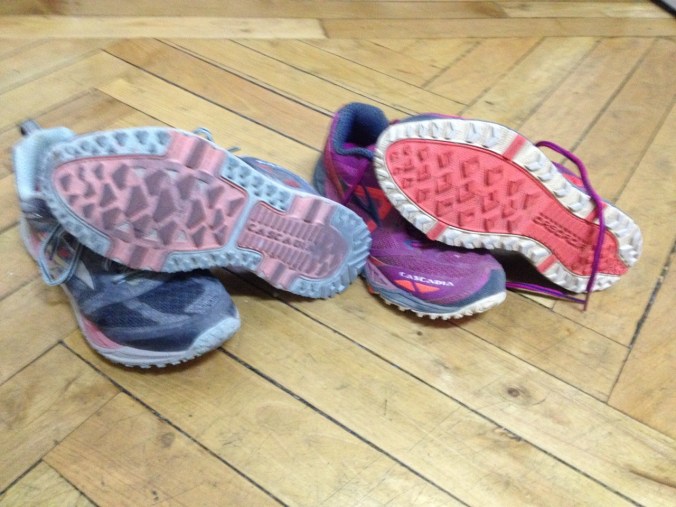
As for shoes, the shoes that I wore on the Camino were near (past) the end of their useful life. I hike in trail runners, which are rated for about 500 miles. This pair of La Sportiva shoes (the Wildcat model) had about 650 miles on them, including the whole Camino, the ascent of Mount Toubkal in Morocco, plus running in California, Sweden, Morocco, and Spain. The bottom, originally actual tread, was getting smooth and part of it was actually coming off.

Looking for trail runners, I tried multiple sport shoe shops in Madrid. All had a shortage of shoes in my size (do Spaniards have small feet?) and high prices. My success came at El Corte Ingles, a department store I wouldn’t have visited if Elizabeth had not wanted to go shopping there. They didn’t have the La Sportiva Wildcat, but I was ready to try a new shoe, and I’m now happy with my Saucony Peregrines (and also find the name amusing as it wasn’t too long ago that I was a Peregrino on the Camino). Elizabeth was spared from having to search for new shoes because one of the items that Chris and Liz brought from California was a new (used) pair of trail runners for her!

IMG_7340

Comparing the non-existent tread on Elizabeth’s old shoes (left) with the tread on her “new” shoes (right).

Also, we were in Madrid during the start of Orgullo Gay (Gay Pride), apparently rescheduled this year to avoid falling on election day (the prior weekend). Having lived in San Francisco for nearly five years, I’m used to the various Pride festivities, and tend to think of it as a holiday/party for out-of-towners. It’s busy downtown and at major parks, but neighborhoods continue with life as usual. Madrid was similar. I was happy for the celebration, but for getting around it just required being smart about dealing with crowds and areas with road blocks/security checks.

[We’re making an attempt to finally get caught up on getting our blog posts up.  This post describes our second visit to Madrid on June 30-July 2, 2016.]

Road Tripping in Andalusia, Part Two

by Michael

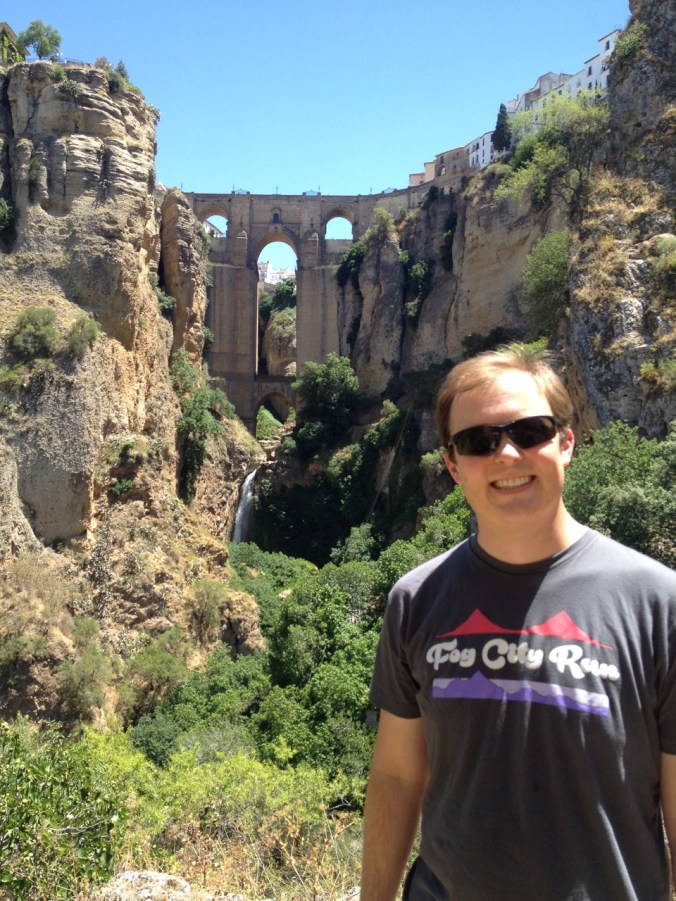
Our next big stop after Monachil (near Granada) was Sevilla. Since we were driving, we looked for places to break up our drive. Our first stop, Ronda, was actually a bit out of the way, but is on many tours of southern Spain and has an amazing super-tall old bridge.

IMG_1955

In front of the “new” bridge in Ronda. They started building in 1751 and it took 42 years to finish!  Says something about the age of the “old” bridge.

Ronda is a nice stop, with a great view, but not really much of a surprise. We hiked down the canyon for a better view of the bridge and briefly walked through the old town (and had a disappointing, overpriced salad) before heading on.

IMG_1962

View after hiking down the canyon and approaching the bottom of the bridge (it’s 120 meters deep!).  Well worth it.

IMG_1959

Peaking back up at the town from under the bridge.

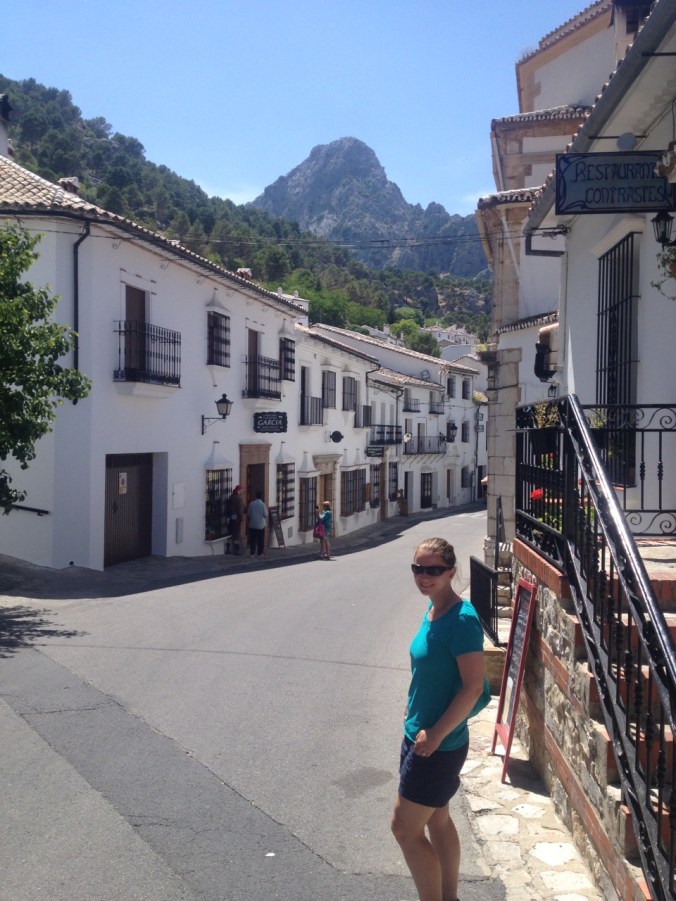
Our second stop, Grazalema, was a small town up in the mountains that were beautiful and unlike anything else we had seen. The roads to get there were about as narrow as country roads in California (the narrow kind that don’t have a center line). The view was totally worth it.

IMG_1965

View of Grazalema. Every building had the same white walls/red tile roof architecture, giving the city a beautiful and quaint look.

IMG_7230

Exploring Grazalema. And by exploring, I mean looking for ice cream.  It was hot (again)!

Dorne, um, I mean Sevilla. 

[Elizabeth note: I’ll assume this is another Game of Thrones reference… sigh.]

In Sevilla, we experienced the downside of driving: getting stuck in really old city centers with tiny streets. We don’t have working data on our phones (we don’t have working phones for that matter), but we do have GPS, so we use an app called maps.me. The app works because the maps are stored on your phone so you don’t need data. It’s been very helpful. Unfortunately it sometimes makes decisions that human judgment would warn against. Like driving down a street that inevitably leads to the narrow centuries-old streets in the middle of Sevilla.

After a couple of six point turns and a lot of frustration navigating down streets with only inches to spare on each side of the car, we made it out and back around to our reserved place!

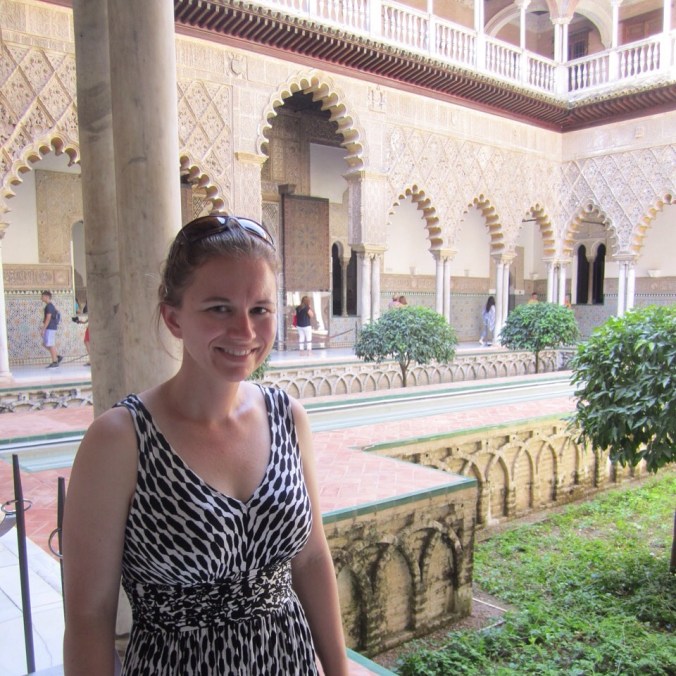
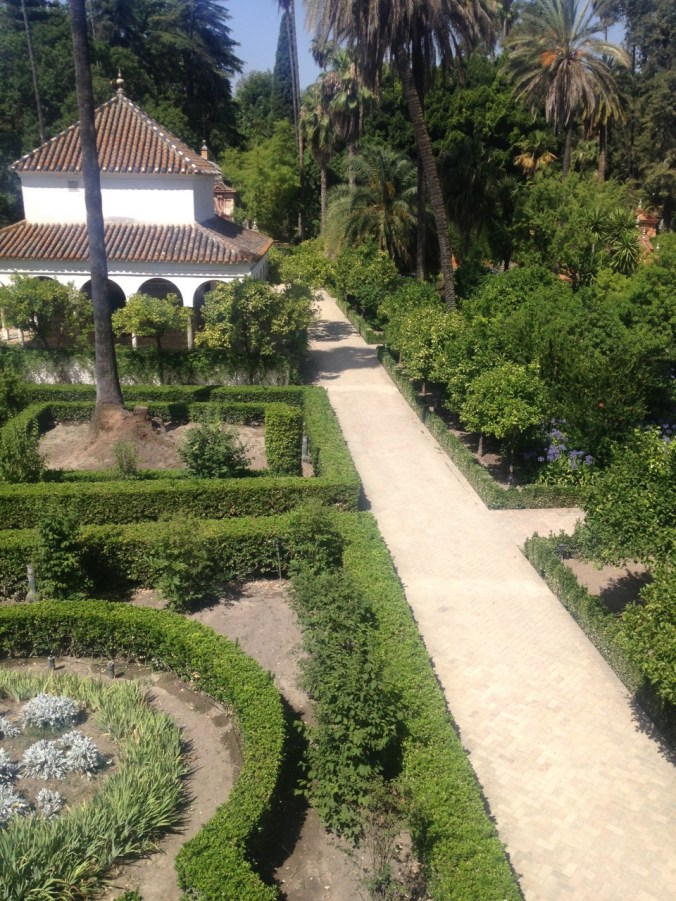
The next morning we visited the Alcazar of Sevilla. I’ve heard of people skipping this in favor of the Alhambra in Granada and the Mezquita in Cordoba. Dear reader: if you visit Spain, please do not make this mistake. The architecture is beautiful, and the gardens are fantastic. And in case I haven’t persuaded you yet and you are a Game of Thrones fan, the Alcazar of Sevilla and its gardens were the filming location for Sunspear, the capital of Dorne.

IMG_7336

Inside the Alcazar.

IMG_7243

Lots of beautify gardens.

IMG_1533

Exquisit moorish engravings.

IMG_1543

Centuries old tiles in the Alcazar featuring unicorns and Mr. Tumnus?

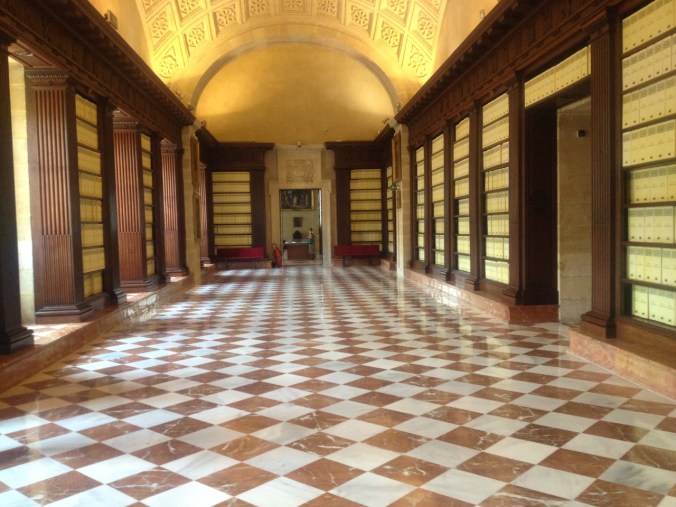
We also made a brief stop at the Archivo de Indias — a building that originally was a sort of customs house for trade with the Spanish colonies in the Americans, and now is a repository of primary source documents from that era. There are a few interesting displays of notable documents — my main disappointment was that I did not have a legitimate research interest to use as an excuse to see some of the old documents in the collection. It’s free and makes for a nice (air conditioned) stop near the Alcazar.

IMG_7256

Inside the Archivo de Indios. Out of curiosity, we may have confirmed that these display boxes where empty when the guard wasn’t around… They have the real stuff locked up away from prying hands and only a few reproductions out on display.  Still a fun (and free) visit.

Have I mentioned yet that it was super hot?! We saw a sign indicating that it was 39 degrees Celsius (102 F).  Walking over to the Plaza España felt like quite a feat in this weather and didn’t make us want to hang out in the (very exposed) square.

[Elizabeth’s note: We also enjoyed great tapas in Sevilla! We stopped in at Bodega Santa Cruz and loaded up on tapas — everything from paella to a great baked cheese.  Six tapas plus a couple beers (small by American standards because the Spanish are weird that way) were enough to fill us up for about 15 euro.  Yum!]

Cadiz

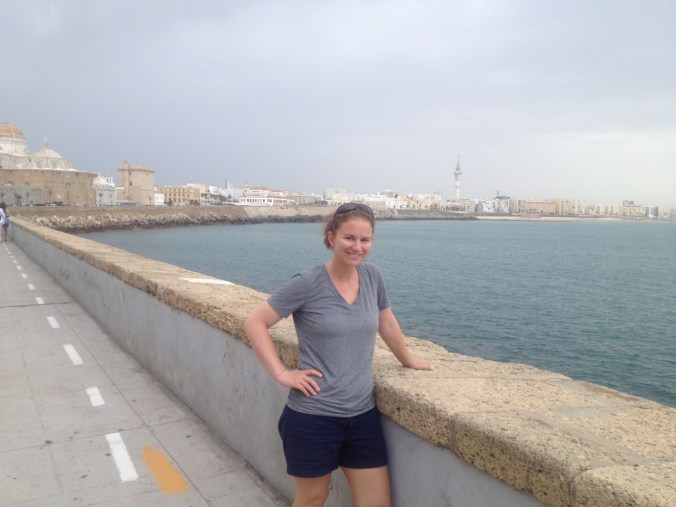
We like and miss the ocean, so we made a day trip from Sevilla to Cadiz. Cadiz is historically significant — when the river silted up so that Sevilla could no longer function as an inland port, trade with the Americas moved to Cadiz.

IMG_7266

Walking along the coast in Cadiz.

IMG_7341

The one site that we did visit in Cadiz was the fort at the end of the peninsula.  A nice walk out and back.  We were impressed by the old men swimming in the ocean out near the end (it was actually cool there!) and it looks like they might be planning to put an exhibit space in the old fort. 

Cadiz is a pretty city on the coast, but no more so than Essaouria in Morocco or Muxia in Galicia. Admittedly maybe a mistake as it was a long drive and we weren’t particularly interested in seeing any of the museums or other “sights” per se.

Cordoba

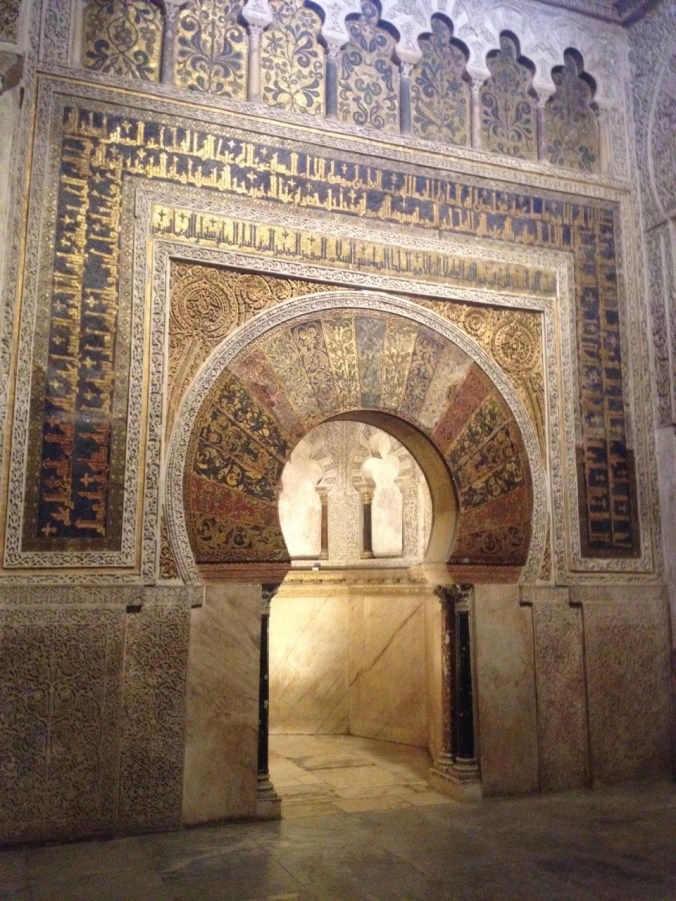
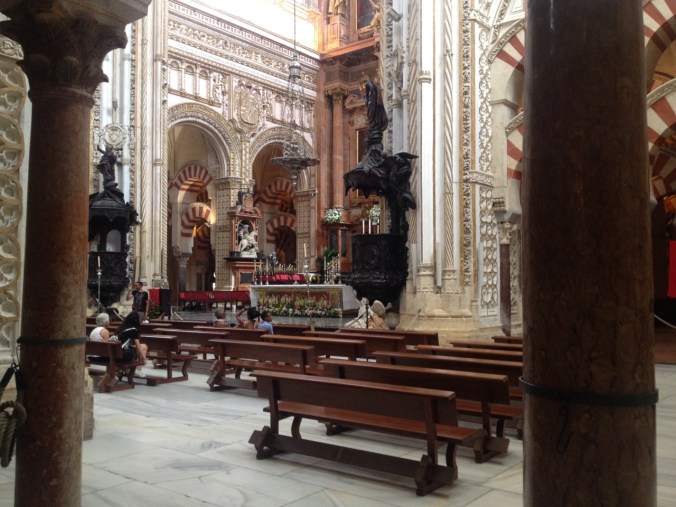
The final leg of our Andalusia road trip was Cordoba. Once the capital of the thriving Umayyad Caliphate and the richest city in Europe during the Middle Ages, Cordoba’s grand Mezquita (mosque) now has a Catholic church in the middle of it. While it lacks the extensive number of buildings or grounds of Sevilla’s Alcazar or Granada’s Alhambra, it is impressive in the size of what is really one giant room. With a church in the middle.

IMG_7288

Lots of arches.

IMG_7285

The Mirhab: a portal facing Mecca indicating the direction of prayer.

IMG_7281

Church inside the Mezquita.

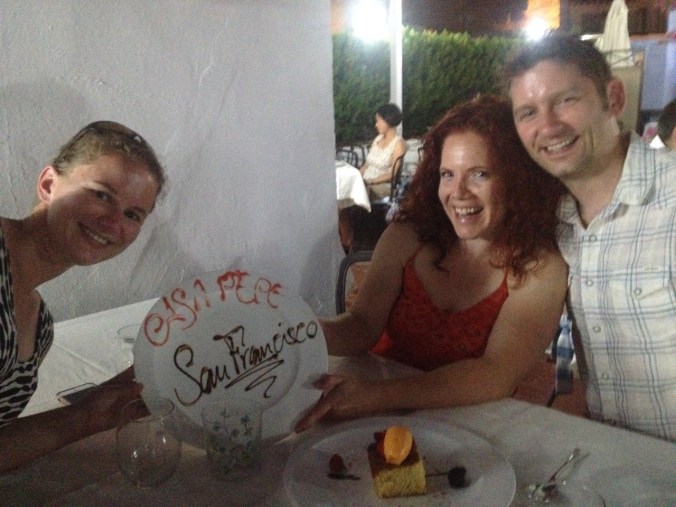
In the evening, we had our first chance to meet up with someone we knew before we started traveling! Chris and Liz were on a short (normal person length) trip in Spain, and we adjusted our plan slightly to end up in Cordoba at the same time.

IMG_7327

Dessert surprise with Liz and Chris.

Long term travel is a relief to get away from the daily grind, but I do miss seeing friends. And while I keep in touch with people online, it’s not the same. Having an evening to talk to people you know, all evening, in English, is a relief. They also brought us a few items that we had shipped to them, which was very helpful.  Thank you Chris and Liz!!!

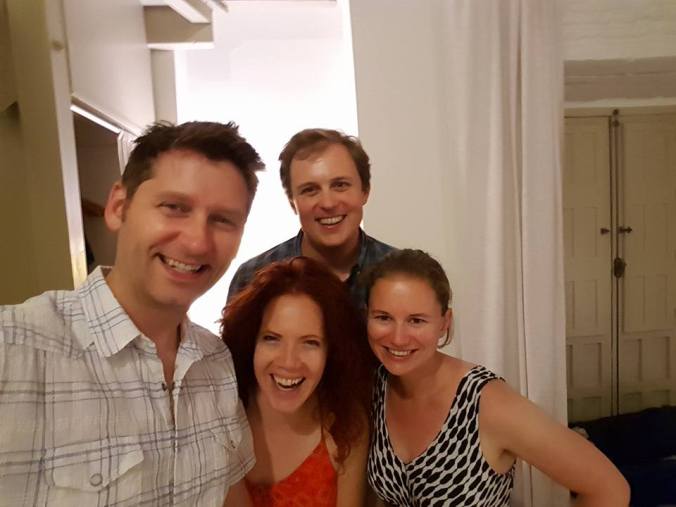
Mooney visit

Stealing Chris’ selfie of the four of us together since we forgot to ask at dinner!

Road Tripping in Andalusia, Part One

by Michael

The typical tourist route through Andalusia runs south from Madrid to Toledo, then on to the triangle of Granada, Sevilla, and Cordoba. The cities are easily accessible by train, bus, or car. So, for the first time on this trip — and any of our prior international trips — we rented a car. Elizabeth visited these cities back in 2006 when she was studying abroad, this is (still) my first trip to Spain. Renting a car gave us the flexibility to see parts of Andalusia that Elizabeth didn’t get to see previously, while still allowing us to see the big sights. We are pretty museum’d and cathedral’d out by this point — we only have the patience/interest for one or two sights a day and prefer to spend our time walking around town or sitting in a park. Neither of us have driven a manual transmission in the last decade (or in Elizabeth’s case, ever), so we paid a bit extra for an automatic. Both the rental and extra cost for an automatic were well worth it.

But before we could enjoy traveling by car, we had to figure out how to get out of the airport. In the US, occasionally a freeway has two or maybe three assigned numbers (Bay Area folks may be familiar with the segment of 80 East that overlaps with 580 West, which heads due North just to add to the confusion). In Spain, it seemed like the freeways had up to a dozen number designations, plus a letter for each number. We made only one wrong turn (getting out of the airport…)!

IMG_1910

We passed a convoy of windmill arms!

The drive to Toledo was a taste of Spanish countryside quite different from what we saw on the Camino. While we had expected parts of the Camino to be brown hills like California, even the Meseta (the “desert of the Camino”) was mostly green. We finally found the familiar golden brown landscape as we headed South out of Madrid toward Toledo.

Toledo and Around

Our first stop was the town of Toledo, which is perched high on a hill.  In the past few years, escalators have been added to assist with the walk up! Toledo was home to painter Doménikos Theotokópoulos, known as El Greco, and houses a museum with exhibits on his life and his art. The museum was intended to be in his former house, but the benefactor bought the wrong house. It was an interesting visit, especially when viewed in historical context of what other painters were doing at the time.  The museum was next door to a former synagogue that has also been turned into a museum. Most tourists visit Toledo as a day trip from Madrid, so we especially enjoyed exploring the city after the masses had left for the day (and the temperature went down).

IMG_7126

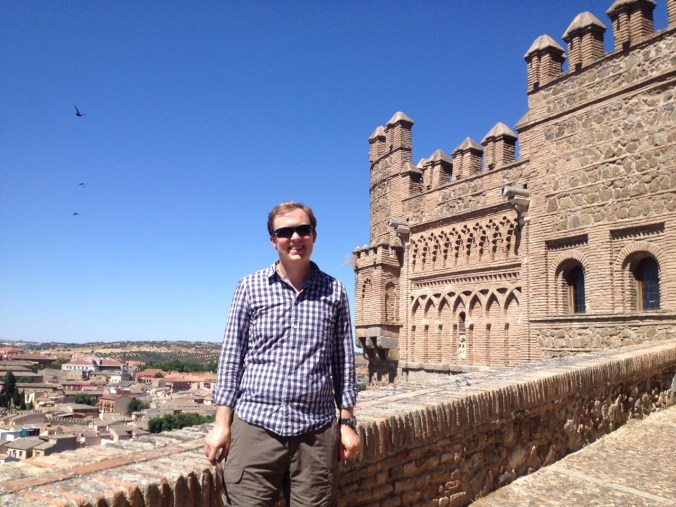
We braved the sun/heat and took a peak in the only remaining mosque in Toledo’s historic district.

IMG_7136

Inside the synagogue (random band setting up for unknown event).

In addition to being tourists wandering the old town and museums, Toledo gave me another chance to run. Toledo is on a hill with a river that runs more than half of the way around the city. From the city we saw the ruins of centuries-old bridges, and I saw on the map that there is a running trail along the water. So the next morning I went for a run along the river, under the new bridges and past the former bridges. It’s a great way to get a feel for the place, and I highly recommend it. Non-runners can enjoy the path as well — I crossed paths with an English fellow I met the day before as he was walking his dog along the path.

IMG_7152

Early morning shadows in the canyon below Toledo’s historic district.

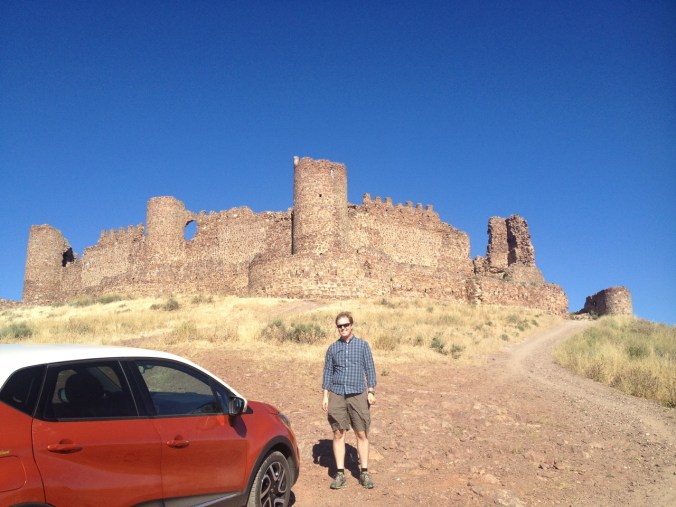
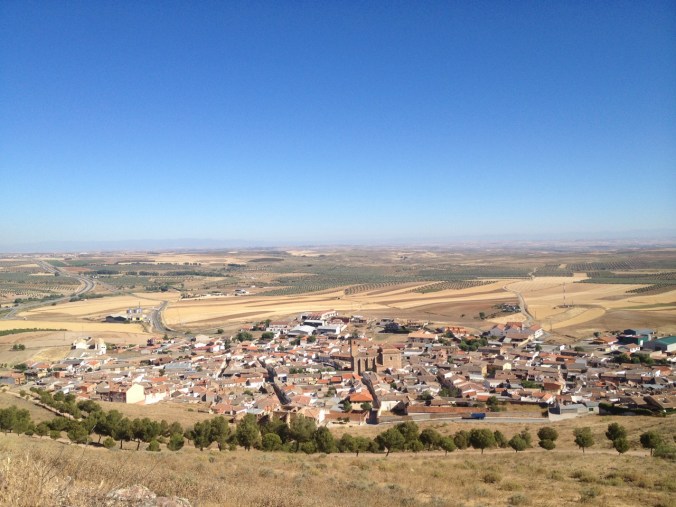
By having a car, we were also able to explore some smaller towns nearby. On our second day, we drove from Toledo to Granada, with a couple stops along the way. At our first stop, Almonacid de Toledo, we drove up to an old abandoned castle and walked around the ruins. It was a one-lane dirt road, so we were lucky no car came the other way. The view was fantastic.

IMG_1902

Check out our orange and cream car! Not pictured — the dirt road leading up to the castle ruins.

IMG_1903.jpg

Looking down from the castle at Almonacid de Toledo.

We also drove up to Castillo Penas Negras near Mora, where again we had amazing views. This time there was a walkway and stairway structure, and a crane that looked like it could work but was not functioning. I guess Spain’s austerity policies applied to castle restoration.

IMG_1906

Castillo Penas Negras.

While I enjoy traveling with just a backpack and no car, this is something we could not have done without the car. It was a nice change of pace.

Two other quick notes from the towns between Toledo and Granada:

1. We saw the Camino symbol on a wall. There are Camino routes all over Spain, so I suppose we shouldn’t be surprised.

IMG_1909.jpg

Driving along the Camino instead of walking (note the blue and yellow scallop shell tile above the window).

2. We had a nice picnic in the park for lunch. Gazpacho (Spanish cold tomato soup) is sold in cartons like milk, so it’s easy to use that as the base item for lunch.

Granada

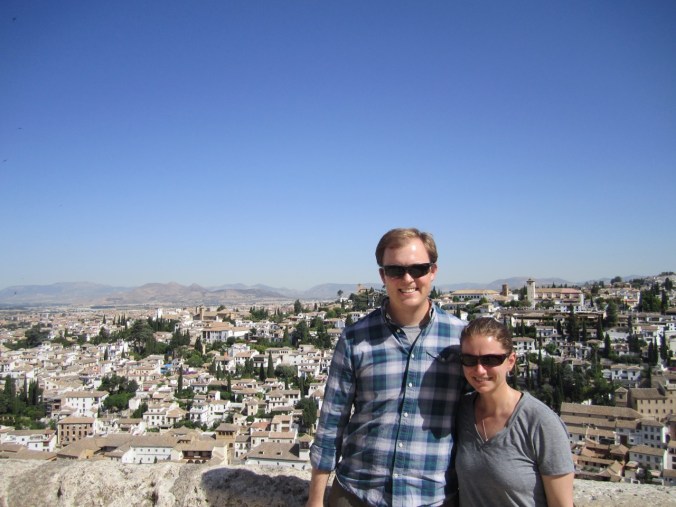
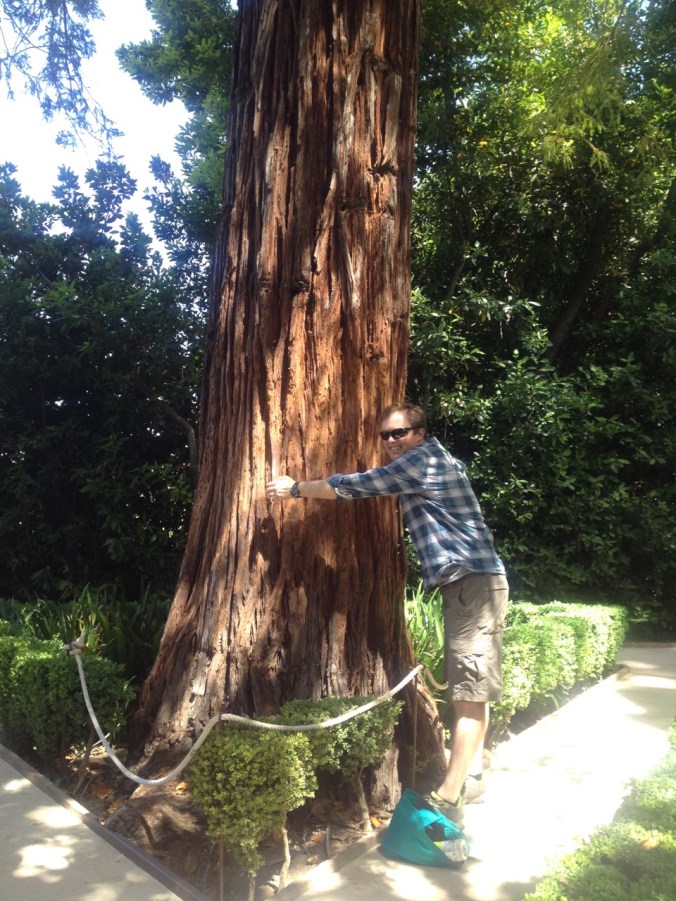
Granada is home to the Alhambra — home to the Moorish Emirs of Al-Andalus until 1492, then to the Spanish “Reyes Catholicos” (literally Catholic Monarchs). The style is remarkably similar to what we saw in Morocco a couple months ago — though unsurprising since the Emirs of Al-Andalus were the last of the muslim rulers of Spain, whose reign began with an invasion from Morocco. It’s a bit strange thinking about Catherine of Aragon, who would later marry (and be divorced by) Henry VIII, growing up here. It’s a beautiful place, and we tried our best to get a few pictures that capture the beauty of the buildings and grounds (including a large redwood tree!).

IMG_1919

Sunset view of the Alhambra from the Mirador de San Nicolas.

IMG_1522

View from the top of the Alcazaba (older section of the Alhambra complex).

IMG_7204

Looking back on the Nasrid Palace from the Generalife gardens.

IMG_7209

The Alhambra is filled with amazing water features.  Perhaps the most amazing part is that they are all gravity powered and still work!

IMG_7213

Tree hugger.

We spent two nights in Granada, with most of our tourist activities focused on the Alhambra.

Tip for last-minute (or poor planning) travelers considering visiting the Alhambra: There can be a long line to get in and not enough tickets in a day. If you book ahead online, that can resolve the problem. Reserved tickets can  sell out as far as two weeks or more in advance. If you are traveling without planning very far into the future (like us), a certain number of tickets are reserved for same-day sales, meaning that you have to trek up to the Alhambra early in the morning to buy your tickets for timed entry that day.

The easiest way to buy tickets in the morning is with a credit card from a machine. In the morning, potential ticket buyers line up in two, separate lines. There is a line to buy tickets from a live person, where you can pay with cash. This probably works, but there is a long line. There are also machines less than 100 meters away — a fact that many people do not seem to realize.  When we showed up at the ticket line at 7am, there were already a bunch of people in the live cashier line but only one person in line for the credit card machine line (neither line officially opens until 8am). We used our American credit card and it worked fine to give us morning tickets.

Around Granada

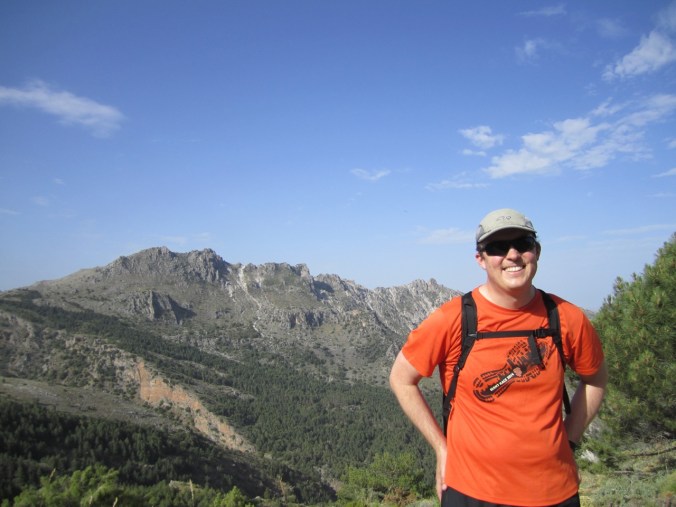
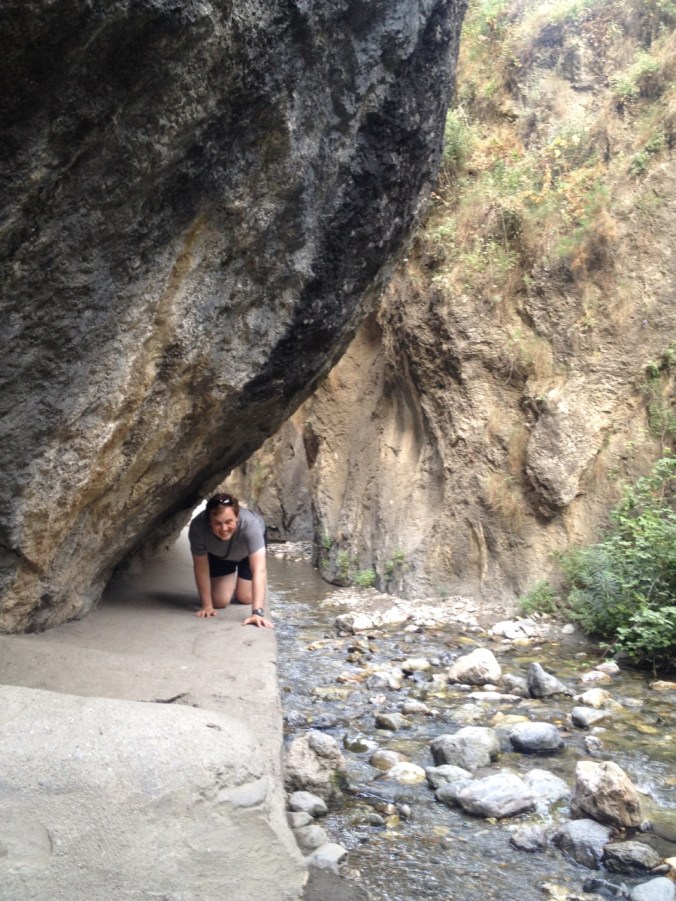
Again enjoying the use of a car, we went for two hikes in the Sierra Nevada mountains (because we haven’t done enough walking on this trip!). No, not the Sierra Nevada mountains in California. Sierra Nevada is Spanish for snowy mountains, so they have them all over. We did two hikes, one over a pass and through a valley (about 16km including approach), and the second through a canyon (called the Cahorros). The first hike felt very remote as we didn’t see anyone for the entire hike. The views were nice and it reminded it of some of our hiking in California’s Sierra Nevada mountains. The canyon hike was much shorter but exciting — there were segments where the trail is blocked by rock, but there are metal hand-holds attached to the rock so you can pull yourself along the path. We took a video showing how narrow the walkway was at one point. We lucked out and found a great English-language resource for hiking the Sierra Nevada mountains at www.treksierranevada.com.

IMG_1525

Up in the mountains again! 

IMG_1527

View from our first hike along Canal de Espartera.

IMG_1934

The hike through the Cahorros canyon required some unusual hiking methods.

IMG_1931

180+ degree panoramic in the Cahorros canyon.

Although the Sierra Nevada mountains are very close to Granada, we chose to stay for three nights in Monachil, though there are several towns like this where you can stay to visit the mountains. It was a much more relaxing atmosphere than staying in Granada.  Our hotel had a small pool (much appreciated in the hot afternoons), there was a great little bar along the river, and we were surrounded by the quiet mountains instead of city noise.  Also, we didn’t have to walk 20 minutes from our hotel in order to find free parking (yep, that was our general parking strategy to make sure that our daily budget wasn’t eaten up by parking charges).

With the exception of the narrow canyon with handles along the walkways, the area where we hiked in the Sierra Nevada mountains was not stand-out great but still offered solid hiking. On a shorter trip, we might have skipped it. But having been gone for so long, this was our chance to get out on our own.  It’s also worth noting that it was really hot while we were in Monachil (highs in the mid-90s each day).  The only way that we could bear to do any hiking was to get up early each morning so that we’d be done hiking no later than 1pm.  However, we noticed that most Spaniards did not do the same, and it seemed that they were all heading out to hike as we were back to town.

[We’re making an attempt to finally get caught up on getting our blog posts up.  This post describes our visit to Toledo, Granada, and the Sierra Nevada Mountains on June 22-25, 2016.]

Museums and Siestas in Madrid

by Michael

I may have grown up in a small town, but I’ve grown into being a city dweller. So while I enjoyed 34 days walking the Camino, even León was a small place to me. Going to Madrid reminded me why I like cities — so many things to do and so easy to do them! We spent roughly three days — not enough to see everything but enough to hit some highlights and get a feeling for the place.

IMG_7068

Overlooking the lake in the middle of Parque Retiro.  It was hot — a big change from cold, rainy Galicia!

IMG_7072

In front of Palacio de Cristal — built in 1887 and still standing!

IMG_7073

Modern art exhibit in the Palacio de Cristal featuring the Titanic… random.

We arrived by train with a commuter rail connection (which took a little figuring out). Madrid has an extensive metro system, but if you are willing to walk a bit, a lot is within walking distance in the city center. That includes the Prado, Reina Sofía, and Thyssen-Bornemisza museums, which we visited over the next couple of days, as well as Parque Retiro and the Royal Palace.  We were lucky to be in Madrid on a Sunday and managed to take advantage of the free days at both the Reina Sofía and Thyssen-Bornemisza museums (which were expensive)!

IMG_7079

Plaza de España

IMG_7095

In front of the living wall (across from the Prado).

There is something special about seeing great art in person. I’ve seen Goya and El Greco in books and on film, but it’s different in person. To be honest I was never that interested in El Greco, but his images are captivating in person. And Goya’s giant 2nd of May and 3rd of May paintings are an experience unlike what you can see in a book. The same is true for Picasso’s Guernica (which is on display in the Reina Sofía) and several others.

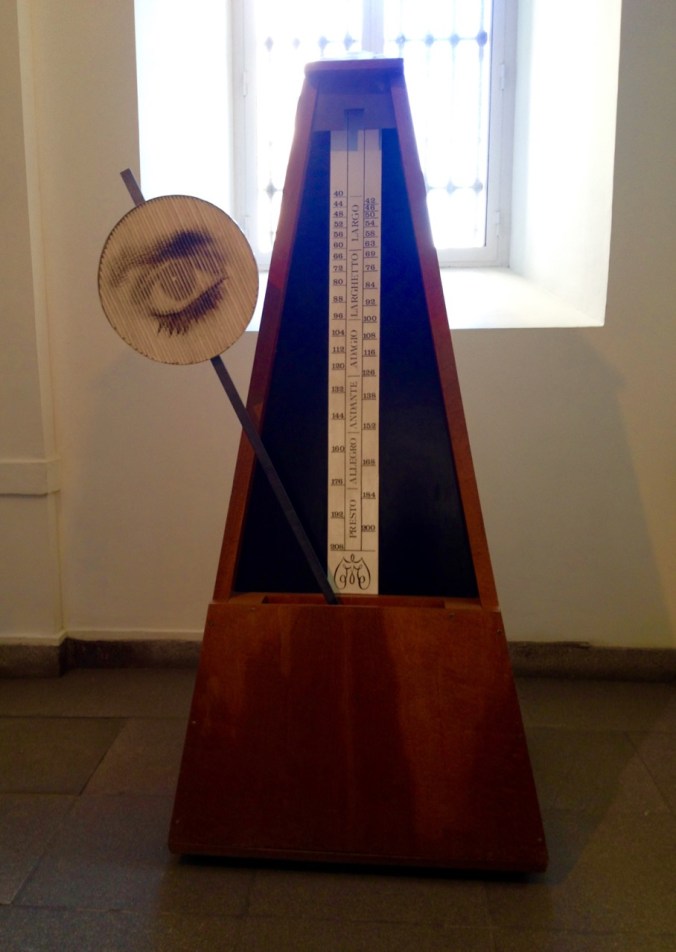
IMG_7087

Man Ray piece on display in the Reina Sofia.  He was the only American artist that we noticed in the collection (although we were only able to see one floor of the permanent collection since it was the free time on Sunday afternoon).

Madrid is also home to a more diverse population, which means more diverse food. I do like Spanish food, but I am a spoiled Californian used to having four types of food on any given street, so being in the city and eating Indian, Thai, Turkish, and Mexican food was a nice change of pace after over a month on the Camino. All were good.

IMG_7099

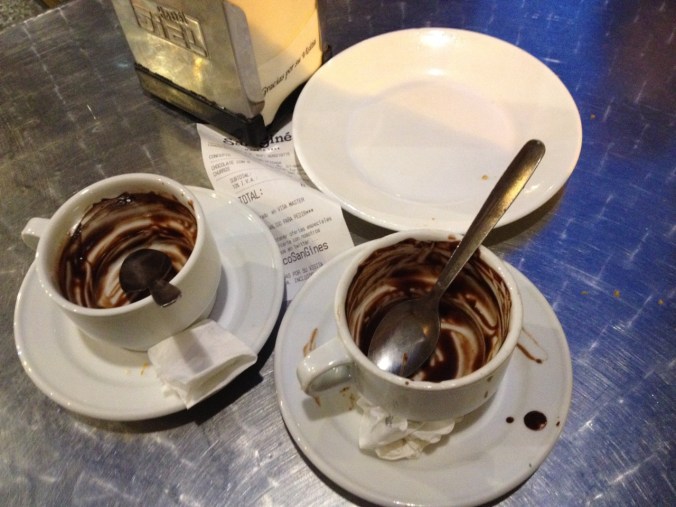
Food pic… except we got too excited and ate the food first.  The one Spanish dish that we had in Madrid was churros con chocolate.  It was amazing.

We also had a chance to see our neighborhood and some surrounding neighborhoods, including Chueca — Madrid’s Castro District. “Orgullo Gay” (Gay Pride) is set for a couple weeks after our visit, so the posters (of people who spend more time at the gym than I do) were up. While we definitely saw that Chueca is home to a gay community, the more visible feature is that it is a nice, lively neighborhood. There are many shop, restaurants, and the multi-level San Antonio market (where we enjoyed tapas and cider).

IMG_7379

Getting ready for pride.

IMG_1892

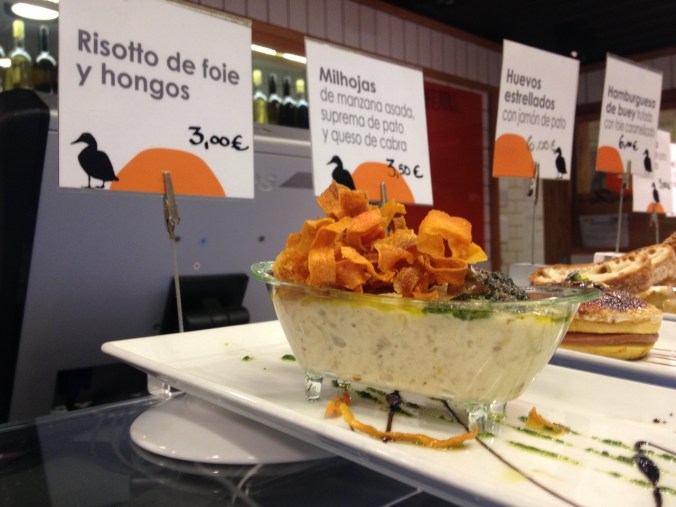
Tapas in San Antonio market — featuring a bathtub full of foie risotto.  Elizabeth sadly passed on this one knowing that I wouldn’t help eat it and that it would be too much for her.

Madrid also gave me a chance to go running again. I love running in cities (more on this in a later post) because it gives me a chance to see neighborhoods, often as they are just opening up in the morning. I did one run mostly in Parque Retiro, enjoying some leafy shade, and another run past the Cathedral, Royal Palace, and Plaza España.

IMG_7124

Along the street that we stayed on — Calle Leon (as in “lion”).

Now we are off on a new adventure: renting a car to go to Toledo and Andalusia. This will be my first time driving in a foreign country — wish me luck!

[We’re making an attempt to finally get caught up on getting our blog posts up.  This post describes our visit to Madrid on June 18-21, 2016.]

Camino de Santiago, Days 31-34

By Michael

At a Glance:

Day 31: Santiago to Negreira (20km)

Day 32: Negreira to Olveiroa (33km)

Day 33: Olvieroa to Muxia (32km)

Day 34: Muxia to Finisterre (35km)

*Distances are approximate.  The Brierley Camino guide that we used does not cover the Camino Finisterre, so we primarily relied on internet sources and a free tourist map that we received at our albergue in Negreira. To add to the confusion, many of the towns have two spellings — the Spanish and Galician versions.  For instance, Finisterre (Spanish) is referred to locally as Fisterra (Galician) and Mucia (Spanish) is Muxia (Galician).

Daily Highlights:

Camino de Santiago Day 31/Camino de Finesterre Day 1:

After a month of walking, we made it to Santiago yesterday. So what do we do next? More walking!

We started the Camino de Finisterre today — the way to the “end of the land.” Historically, many pilgrims would continue on past Santiago until they reached the coastline. We are actually going in a round-about way — stopping first in Muxia (a coastal village further north) and then to Finisterre. The trails run together for two days, then split early on day three, with a fourth day connecting the two destinations.
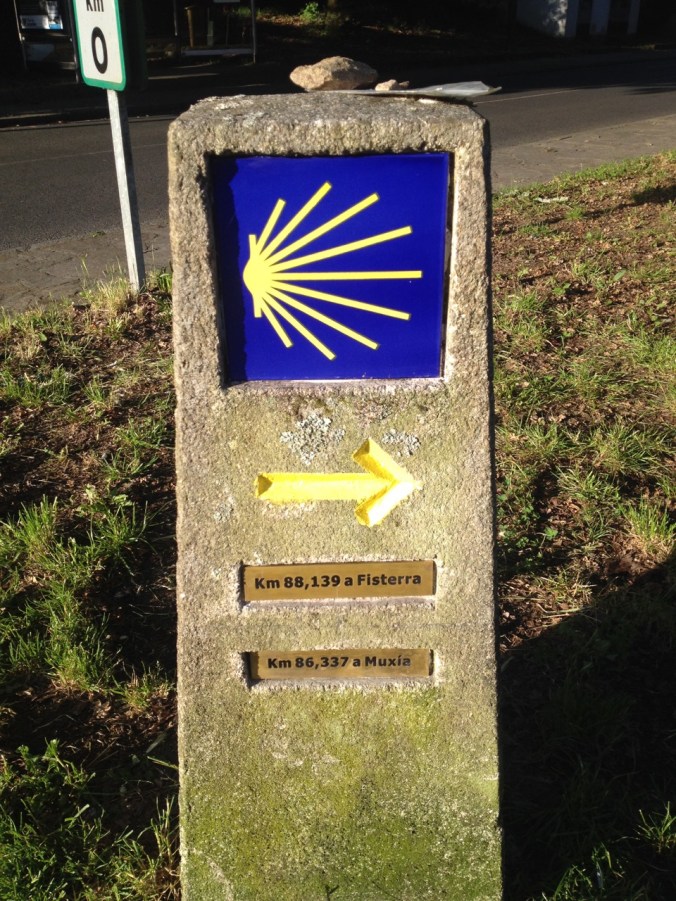
IMG_6869

Mileage marker just outside Santiago to both Fisterra and Muxia

Since we had worked so hard to get to Santiago (and stayed up for soccer last night), we slept in. We didn’t leave our hotel until 8:00 a.m.!!!

IMG_6876

Today, thankfully, was the short day. There seems to be limited accommodation west of Santiago, so there are not lots of choices for where to stay. We hiked roughly 20 km, though the same type of terrain we saw in most of Galicia. At one point we put our feet in the river (second time!), and enjoyed a really excellent view of a cute town and bridge.  There were far fewer pilgrims on the trail today (although there was some kind of community walk headed in the opposite direction as us).

IMG_1490

Cute town along the way (name unknown — we have no map for the first day’s walk out of Santiago).
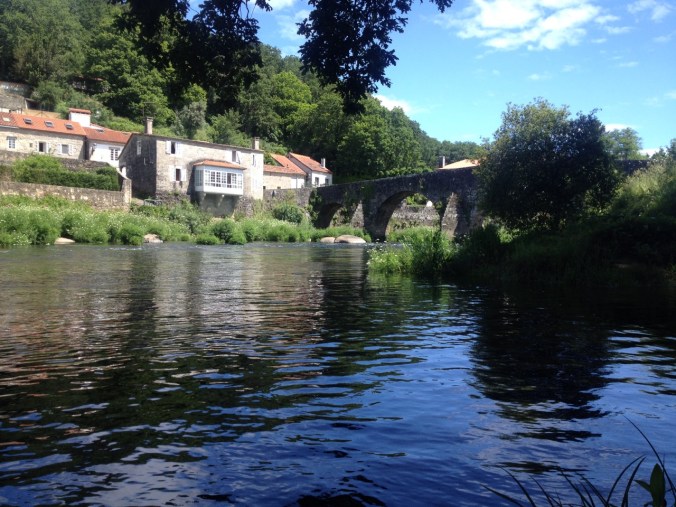
IMG_6873

View as we soaked our feet.

When we arrived in Negreira, we booked our beds in Albergue Lua (getting extended instructions from our host regarding what to expect the next few days, including a much welcomed map), and after a trip to the supermarket stopped at an “English Pub,” where we enjoyed cider and O’Hara’s beer (it’s like Guinness but not as good).

As we drank, a bunch of bicycles passed us along the street. It turns out that there was a triathlon going on while we were there. It was 20k of bicycling and 5k running, plus however long the swim was. As the bicycling was finishing up, we walked over to the arch at the other end of town, where we saw the athletes finish their runs and get their final time. They had the whole Camino blocked! It’s a good thing that we got where we wanted to be before the race started.

IMG_6889

The end of the triathlon.

Elizabeth is feeling sick again.  Her cough has finally started to get better and now she’s sneezing again and afraid the cycle has started over again.

Camino de Santiago day 32/Camino de Finisterre day 2:

We woke up at a more normal time and got on the trail before 7:00 this morning for the longest day of the Camino Finisterre. It was a lot more of the same type of terrain, but a little bit less well-marked. At one point a bicyclist passed me and told me that Elizabeth was behind by at least a kilometer. This was surprising since she had been ahead of me and I had hurried to catch up but couldn’t get her in sight (I had stopped briefly to put on my rain jacket, which to me explained the gap). I turned around and met her back on the road, learning that she had taken a wrong turn and had sought out the bicyclist to send the message up ahead.
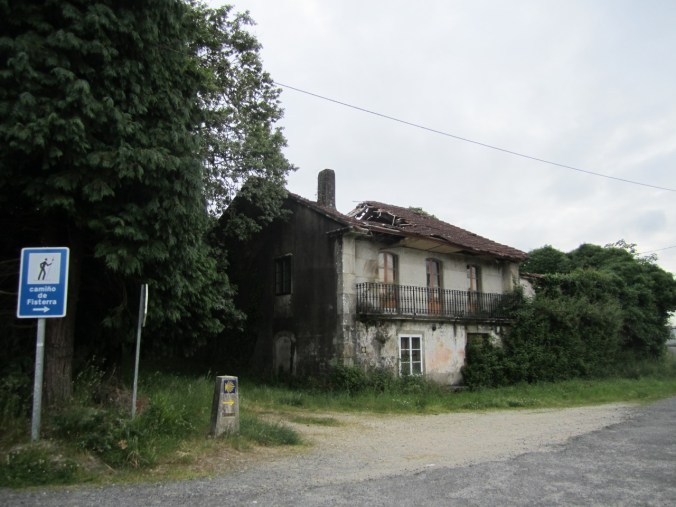
IMG_1492

Can I interest you in a fixer upper? We passed many buildings in need of some TLC along the Camino.

It rained a little during the day; not much, but it felt like hours of walking through a cloud. More than anything, it was a tough day because it was about getting back into the habit of walking a longer day. Apparently they have a word for this light rain in Gallego (the Galician language) that literally translates as “the rain that gets dumb people wet” — because it seems like you shouldn’t need a rain jacket, but before you realize it you’re soaked (also really, with such rain, why not go inside?).
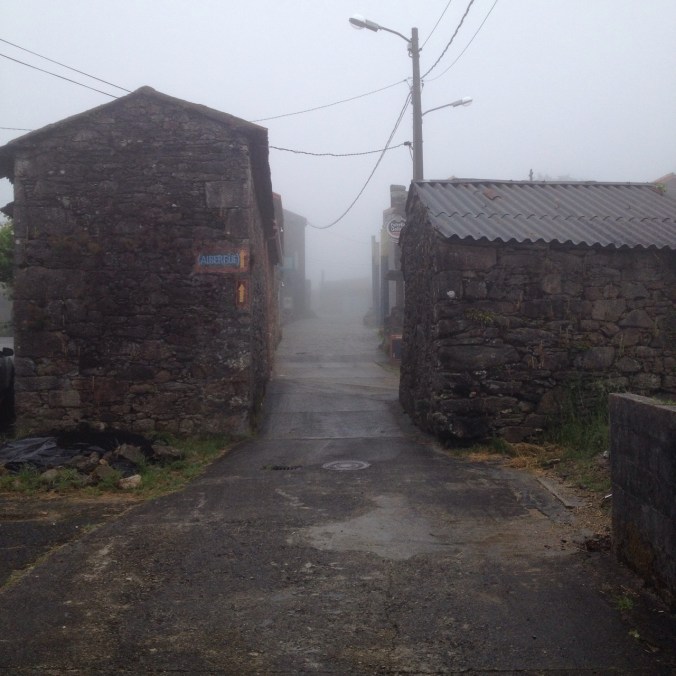
IMG_7022

Rain? Fog? Mist? Wet.

We spent the night at the municipal albergue in Olveiroa, another super small town that seems to only exist for the Camino. We enjoyed talking with a Korean couple that lives in Hawaii while we cooked our lunch at the albergue (they stayed at our albergue last night too). We’re starting to notice that most of the people walking the Camino de Finisterre also started in St. Jean like we did; these are not the people that started at the 100km mark in Sarria (perhaps because we’re the only ones that can spare another 3 or 4 days? or are crazy enough to keep walking?).

Camino de Santiago day 33/Camino Finisterre day 3:

We got an earlier than ordinary start on our way to Muxia this morning. We were greeted with rain. The rain was not as hard as it was a couple weeks ago before Leon, but it lasted longer and just kept raining for the first half of our hike today. In a 30 km day, that’s a long time to walk in the rain.

IMG_6911

Trail split.  And rain.

Fortunately the rain softened and then ended after our morning break in Dumbria (about 10km into the day), and most of our day was under cloud-cover. Shortly after the sun came out we heard sea gulls and found our first view of the ocean! In another few km we were in Muxia, a small village out on the cape that borders a large bay. 

IMG_6916

Our first glimpse of the ocean!

IMG_6923

Approaching Muxia.

Unlike most of our days on the Camino, where we are done walking once we get to the albergue, in Muxia we had another couple km to go before we could call it a day.  We left our stuff at the albergue and then walked a final km out to the end of the peninsula.
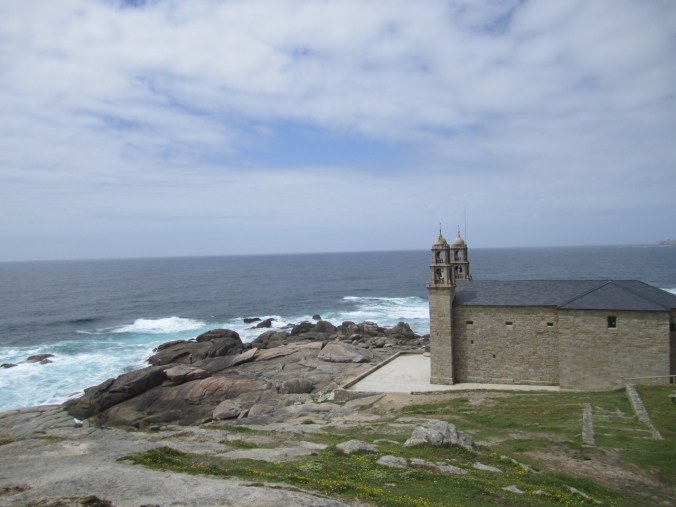
IMG_1494

Dramatic end to our walk to Muxia.

According to legend, Saint James came to Muxia to evangelize and the Virgin Mary arrived in a stone boat to encourage him to keep on spreading the word. There is a church at the end of the peninsula marking the site, and although it was not open when we arrived, there were a couple windows designed to let tourists see in. We spent some time sitting on the rocks along the water and were about to head back to our albergue when we saw a familiar sight — one of the Canadian couples that we had seen off and on throughout the Camino (from our second night to the day that we passed through Villafranca).  They had finished the Camino and had bussed out to Finisterre and Muxia for the day and just happened to be there as we were walking back!

IMG_6941

Looking down on Muxia.

I rounded out the night by going out to a bar to watch part of the Italy vs Belgium soccer match. Or so I thought. It turns out that the Euro 2016 soccer tournament is on one channel in Spain, and that channel decided to show only one game per day. Because Spain played in an earlier game, Italy/Belgium was not broadcast.

[Elizabeth’s note: As noted above, we have seen far fewer pilgrims since leaving Santiago.  This was especially evident today, since we split from the trail headed directly toward Finisterre after about 5km.  After the split, we only saw a single group of pilgrims just before arriving in Muxia.  Similarly, there are only about a dozen pilgrims staying in the municipal albergue here.  The albergue itself is a huge, modern building that is weirdly empty (partly by design as there are not many beds but probably 3 chairs per bed spread throughout the facility). One treat at the municipal albergue is that we received another certificate stating that we have walked to Muxia — it’s in Gallego instead of Spanish!]

Camino de Santiago day 34/Camino de Finisterre day 4

Last day on the Camino!

Finisterre literally means “end of the land.” It is believed that pilgrimage to Finesterre is much older than the Camino, as the celtic peoples of pre-Christian Galicia understood it as the westernmost point in Europe (it isn’t — there are places in Ireland and Portugal further West).

Before we started the day — actually during our lunch break yesterday — we booked an apartment to stay in for a few days after we finish the Camino. Since we had a few requirements (internet, washing machine) we ended up booking a place in Muxia. But we still wanted to finish the Camino at Finisterre, so we left our albergue in Muxia with our bags, walked past our apartment for tonight, and continued on to Finisterre, planning to to take a taxi back to Muxia.
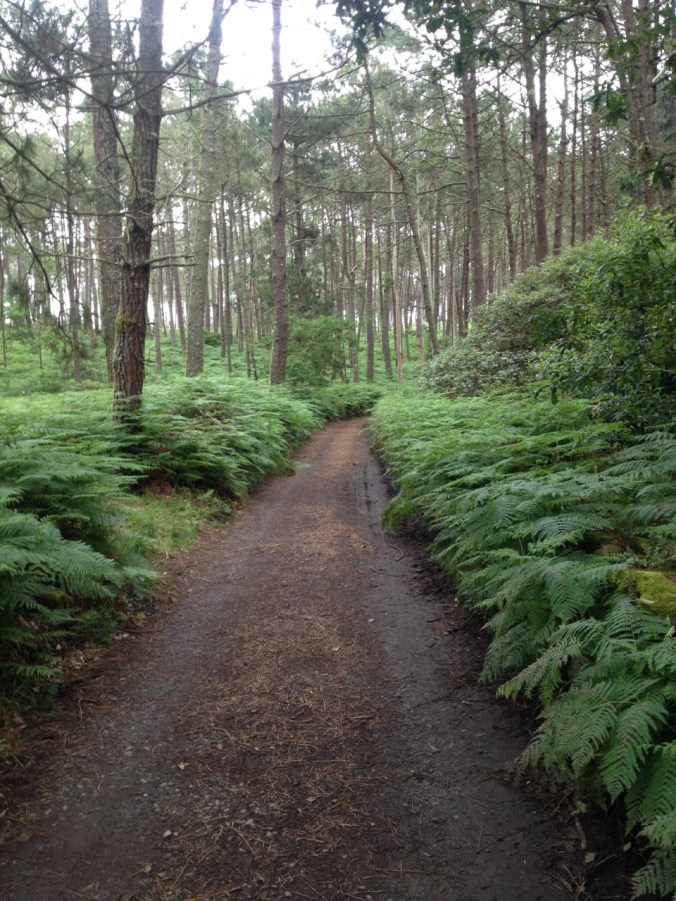
IMG_6969

More of the “green tunnel” for our final day of walking.
IMG_6968

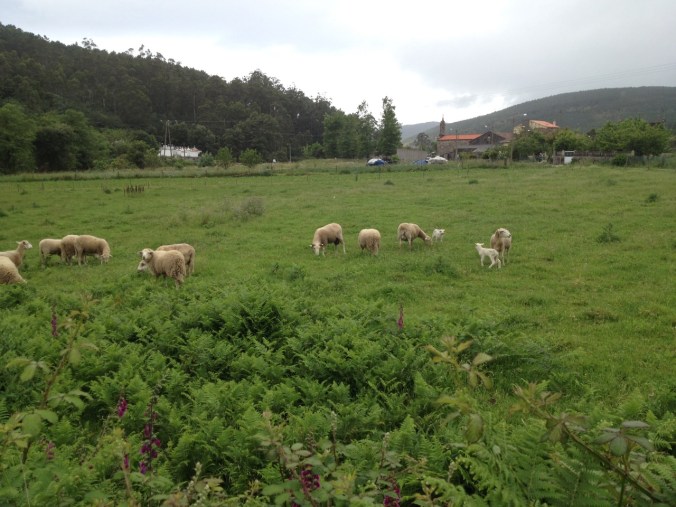
More sheep.

Today’s path starting along the coast by a beautiful beach with a view of what appeared to be a  half-built luxury hotel. Then the trail turned inland and climbed a mountain. We could see serious clouds up ahead and were determined to make it to the top before the bad weather hit.
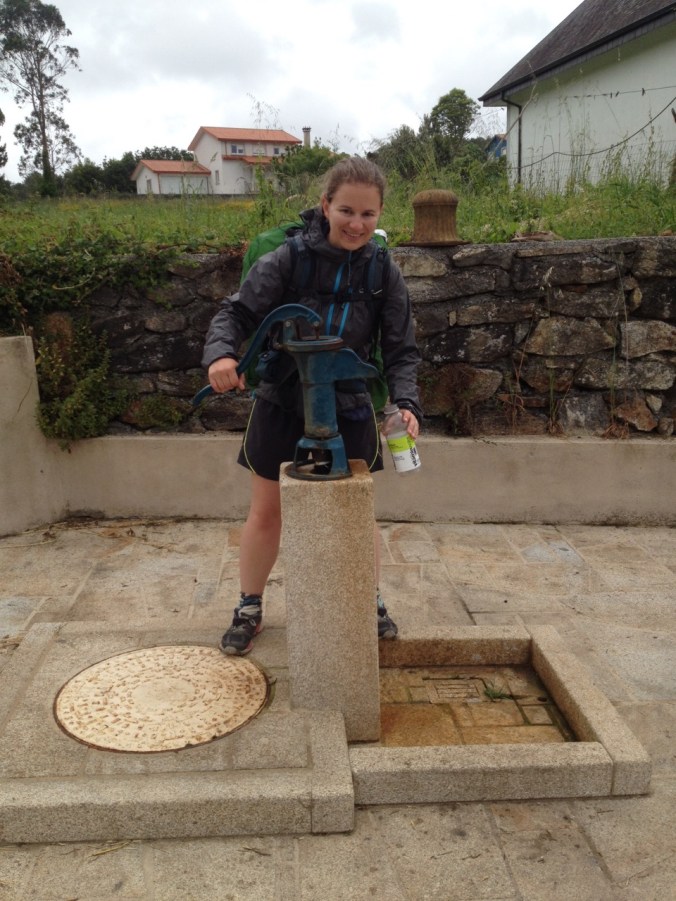
IMG_6961

Trying out one of the more unusual water pumps along the Camino.

We made it over the top and part way down the other side before we had to get out our rain gear, and even then it never rained too hard. The terrain was lush and often forested, and we made our way to the single cafe on today’s route (at about the 14km mark) before making our way into the town of Finisterre. As with yesterday, reaching town did not mean that we were done walking — there was another 3 km to the lighthouse at the end of the land.
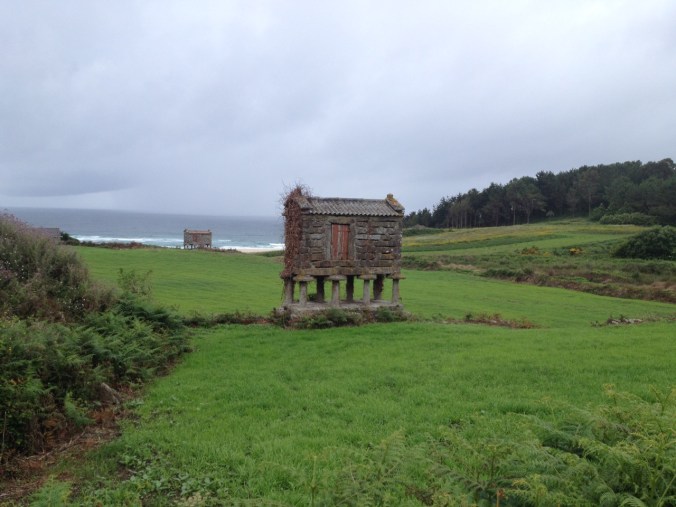
IMG_6978

More traditional horreos along the coast.

As we entered Finisterre, it began to rain so we stopped for hot chocolate. We figured out where we would later go for our “Finisterrana” — our certificate of making it to Finisterre — and I discovered a restaurant serving real curry by smell (I’m quite proud of that) that we decided would be our treat once we returned from the lighthouse.

Then we headed out to the lighthouse at the end of the land. Since we weren’t staying in the town of Finisterre, we carried our full backpacks. On the way up, we ran into a couple from Washington state who we had walked with over a week ago as we headed into Rabanal (they had bussed to Finisterre), and talked to them during our final kilometers. And then we reached the end.

IMG_1498

Our final marker — the 0 kilometer marker!

I had felt incredibly excited when I reached Santiago; I was emotional at Finisterre. There was a bagpiper next to the lighthouse and I had to hold back a few tears as I realized this was coming to an end, with a fitting soundtrack. It’s not that I wasn’t ready to finish — my feet definitely were ready to be done — but it’s a bit overwhelming, and being up on cliffs — which really do feel like the end of the world — makes it more powerful.

IMG_7007

At the end of the world!

IMG_7015

So windy.

Just past the lighthouse it became much more windy. We took a couple pictures and watched a few people ceremonially burn possessions (we had nothing sufficiently flammable, dry, and disposable to burn). As we started walking back, we took pictures for a German couple. While there are many people out at the point, few have their full backpacks. Most took a vehicle at least to the nearby town, if not to the point itself. They noticed our backpacks and asked how far we had walked and congratulated us when they heard it was from France. That felt good.

IMG_7040

Our shoes have earned their retirement — job well done!

Before heading back to Muxia we had our curry lunch (pretty good actually), picked up our Finisterana, and met up with Kat from Australia (who’d chosen to give her feet a break and drove to Finisterre for a few days relaxation). Cabbing back to Muxia was interesting both because we haven’t been in a motorized vehicle since St. Jean over a month ago and because although we took a different route than we walked, we covered today’s walk in about 30 minutes (prompting Elizabeth to get carsick).

We’ll be spending the next couple of days letting our bodies have a chance to rest in a wonderful apartment overlooking the ocean in Muxia.  Rain is forecast for the rest of the week, so I expect that we’ll spend much of the day inside admiring the view.

IMG_1873

View out the window of our apartment.
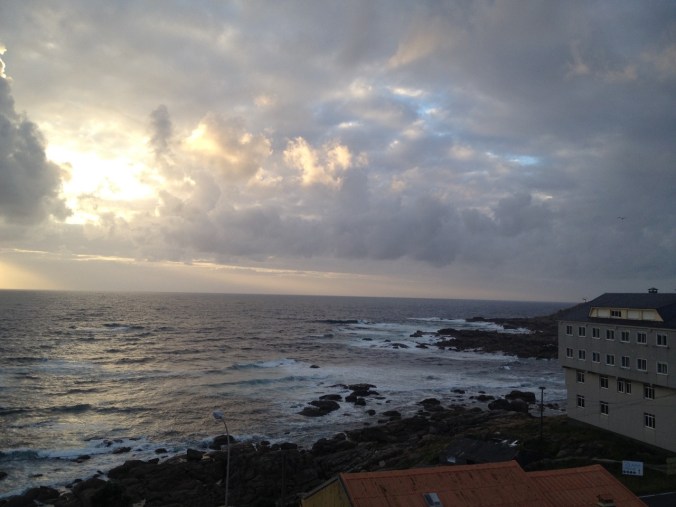
IMG_1872

Enjoying sunset amidst the clouds.

And now to relax and sleep in past 5:45am!